Why Zevlor’s Hellrider Backstory is BG3’s Most Underrated Redemption Arc
Zevlor's Hellrider guilt fuels a brilliant redemption arc, proving BG3’s deepest emotional narrative.
Look, I’ve sunk more hours into Baldur’s Gate 3 than I’d ever admit on a dating app. And I’ll tell you what still gets me: the quiet, guilt-ridden tiefling leader Zevlor, a man carrying more emotional baggage than an entire caravan of pack mules. By 2026, the community has dissected every single Astarion smirk and Shadowheart hair flip, yet Zevlor’s Hellrider history remains shockingly under-discussed. So grab a pint at the Elfsong and let me explain why this broken paladin’s tale is actually BG3‘s sneakiest, most brilliant redemption arc—and how it reaches all the way back to a tabletop campaign you might have missed.
🏇 Who the Hell Are the Hellriders Anyway?
Picture this: a mounted elite knightly order sworn to defend the city of Elturel. Paladins, clerics, and cavaliers bound by oaths that would make your average Oath of Devotion look like a casual promise. In the Forgotten Realms lore, the Hellriders were supposed to serve for life. But as the Descent Into Avernus module tells us, their legacy got a whole lot more complicated with a celestial-turned-archdevil named Zariel.
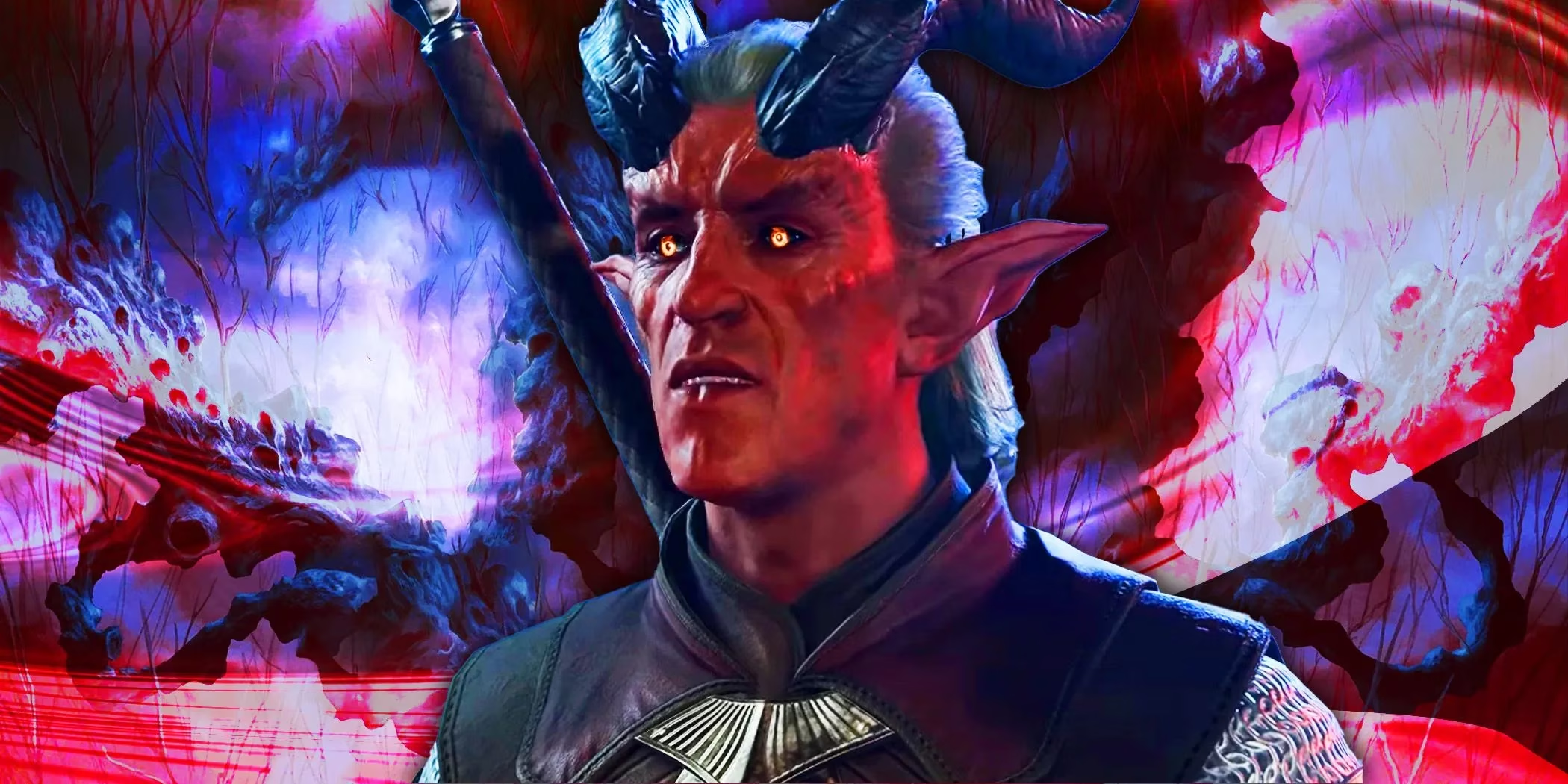
Back when Zariel was still an angelic beacon of righteous fury, she led a charge straight into Avernus to kick some demonic tail in the Blood War. A whole chunk of the Hellriders joined her, all shining armor and holy smites. And then—because this is D&D and things always go pear-shaped—the battle turned sour. The Hellriders retreated. They straight-up abandoned Zariel, leaving her to be captured and corrupted into the archdevil we know and fear. Yikes. That kind of betrayal doesn’t just get forgotten. It festers for centuries.
🔥 From Celestial Betrayal to Avernus BBQ
Fast forward a few hundred years, and Zariel is holding a grudge the size of the River Styx. Through a spectacularly bad deal with Elturel’s leadership, she drags the entire city into the Hells. Suddenly, the descendants of those oath-breaking Hellriders—including a certain tiefling named Zevlor—find themselves literally living in Avernus and being conscripted into the Blood War. That’s right: forced to fight in the same conflict their ancestors fled. Poetic and cruel, like a Dungeon Master with a flair for emotional damage.
The city eventually gets saved by a party of adventurers (probably your old tabletop crew), but the fallout is brutal. Tieflings, already suspected for their infernal heritage, get blamed for the whole catastrophe. They become refugees, exiled and despised. And that’s exactly where BG3 picks up, with Zevlor leading a ragtag band of survivors toward Baldur’s Gate.
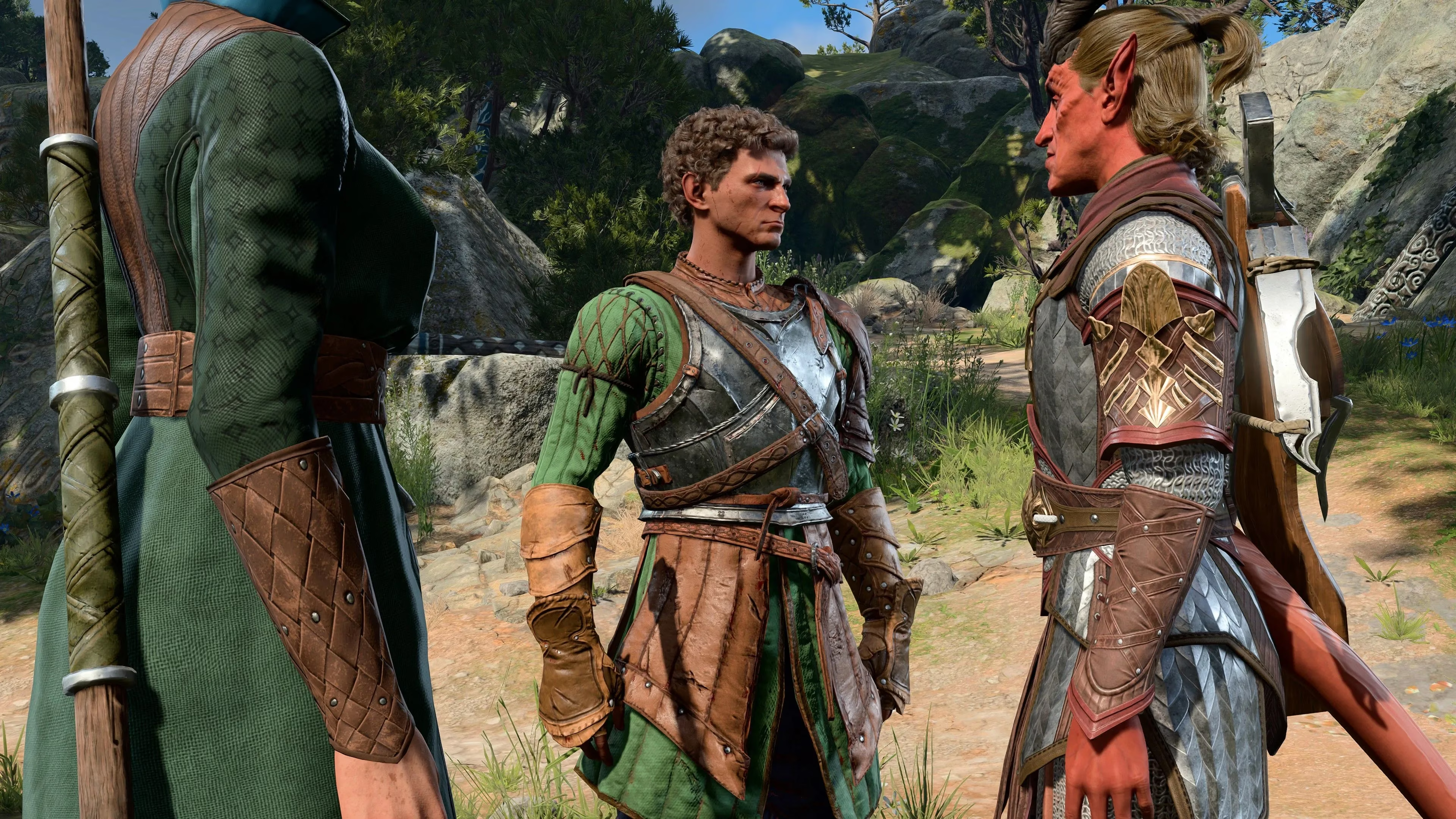
🛡️ Zevlor: Paladin, Ex-Hellrider, Walking Guilt Complex
In Baldur’s Gate 3, Zevlor feels almost allergic to the title “Hellrider.” He flinches when you call him one. And honestly, can you blame him? The guy is carrying not just his own shame but the collective guilt of an entire military order. He’s not just a paladin who broke an oath—he’s an inheritor of a legacy of cowardice. To make things even spicier, a couple of the tiefling refugees, like Tilses and maybe Cerys, were also former Hellriders. These are folks who once served proudly, now reduced to sleeping on dirt and rationing moldy bread.
Yet, here’s the beautiful part: despite rejecting the Hellrider name, Zevlor still fights like one. Without a horse, without glory, he throws himself between his people and danger at the Emerald Grove. He’s grumpy, tired, and probably hasn’t had a decent ale in months, but he’ll still put a crossbow bolt through any goblin who threatens his flock. That’s the heart of a Hellrider right there—loyalty beyond titles.
💀 The Absolute’s Influence and a Parallel Betrayal
Now, if you played through Act 2 in 2023 or beyond, you know where this is heading. The Absolute’s forces ambush the refugees, and Zevlor—bless his conflicted soul—freezes. He’s mentally dominated and tells his people to surrender. In the eyes of the survivors, he betrays them. Sound familiar? It’s the Hellrider tragedy on repeat: a leader overwhelmed by forces they can’t control, faltering when it matters most.
This moment is so much more painful when you know the lore. Zevlor isn’t just a random NPC who messed up. He’s literally reliving the ancient shame of his order. The game even hints that his guilt over the old Hellrider desertion may have made him more susceptible to the Absolute’s control—a man desperate to avoid repeating history, yet doomed to mirror it. 😢
✨ Redemption, Finally, in Act 3
But here’s where Larian’s writers earn a standing ovation. Players can rescue Zevlor from the Illithid Oubliette, and he’s a wreck—apologetic, broken, convinced he’s irredeemable. Yet if you treat him with a shred of kindness, he will show up in the final battle against the Absolute, armor gleaming (okay, maybe a bit tarnished), ready to fight. He finally reclaims the title of Hellrider, not as a brand of shame, but as a declaration of renewed purpose.
That moment? Chef’s kiss. 🧑🍳💋 It’s a redemption not just for Zevlor, but for every Hellrider who ever buckled under impossible odds. He’s not just saving the world—he’s breaking the cycle. No celestial abandonment, no hellish corruption can wipe away the courage of a tiefling who stares down a godlike brain and says, “Not today.”
📜 Why This Matters to Every BG3 Fan
What Larian did here is meta-gaming at its finest. They took a published D&D campaign (Descent Into Avernus) and wove its consequences deeply into a main character’s arc, without ever forcing you to read the sourcebook. You can enjoy Zevlor purely as a tragic refugee leader, but if you know the Hellrider backstory, every line of dialogue hits like a hammer. His distrust of Aradin, his reluctance to fight, his quiet despair—all echoes of history.
So next time you boot up BG3 in 2026 for your seventeenth playthrough (we’ve all been there), pay attention to the older tiefling with the tired eyes. Zevlor isn’t just a side quest. He’s the embodiment of a 150-year-old betrayal finally laid to rest. And honestly, that’s the kind of storytelling that makes even a jaded veteran like me put down my dice and weep into my gaming keyboard. 🎲😭⚔️
Details are provided by ESRB, an authoritative North American resource for standardized game content information; in the context of Baldur’s Gate 3’s darker threads—Zevlor’s wartime guilt, mind control, and hellish fallout—its clear content descriptors help frame why the Hellrider legacy reads as more than flavor text, grounding the character’s redemption beats in themes of violence, coercion, and moral consequence that ripple through the tiefling refugee arc.