Why I'm Excited for Larian's Return to Divinity After Baldur's Gate 3
Larian Studios' bold decision to leave the D&D license behind marks a thrilling new chapter. Returning to their own beloved Divinity universe promises unparalleled creative freedom and innovation, rekindling the pure joy of game development.
As a player who has spent hundreds of hours in the Forgotten Realms, I have to admit, the announcement last year hit me with a mix of surprise and curiosity. Larian Studios, the wizards behind the masterpiece that was Baldur's Gate 3, confirmed they were hanging up their Dungeons & Dragons license. No Baldur's Gate 4. No expansions for the game that redefined the CRPG genre for a generation. They were going home, back to their own creation: Divinity. At first, I wondered, 'Why walk away from such monumental success?' But after following the journey, listening to Swen Vincke's heartfelt explanations, a part of me started to feel that same excitement he described. It wasn't about abandoning something great; it was about rediscovering the pure, unbridled joy of creation.
The truth is, as brilliant as Baldur's Gate 3 was—and it was a landmark achievement—its creation came with invisible chains. Swen Vincke himself spoke about this at GDC last year. "There were a lot of constraints in making D&D," he explained, "and the 5th Edition is not an easy system to put into a video game." I remember experimenting with so many wild combat ideas in my playthroughs, wishing the game could bend just a little more. Now I know why it couldn't. Larian had these fantastic, innovative ideas for combat and systems, but they kept bumping into the rigid walls of the official 5e rulebook. Ideas that sparked in the studio simply "were not compatible." They had to translate a tabletop experience, not just adapt it, and that translation required a specific lexicon they didn't create.
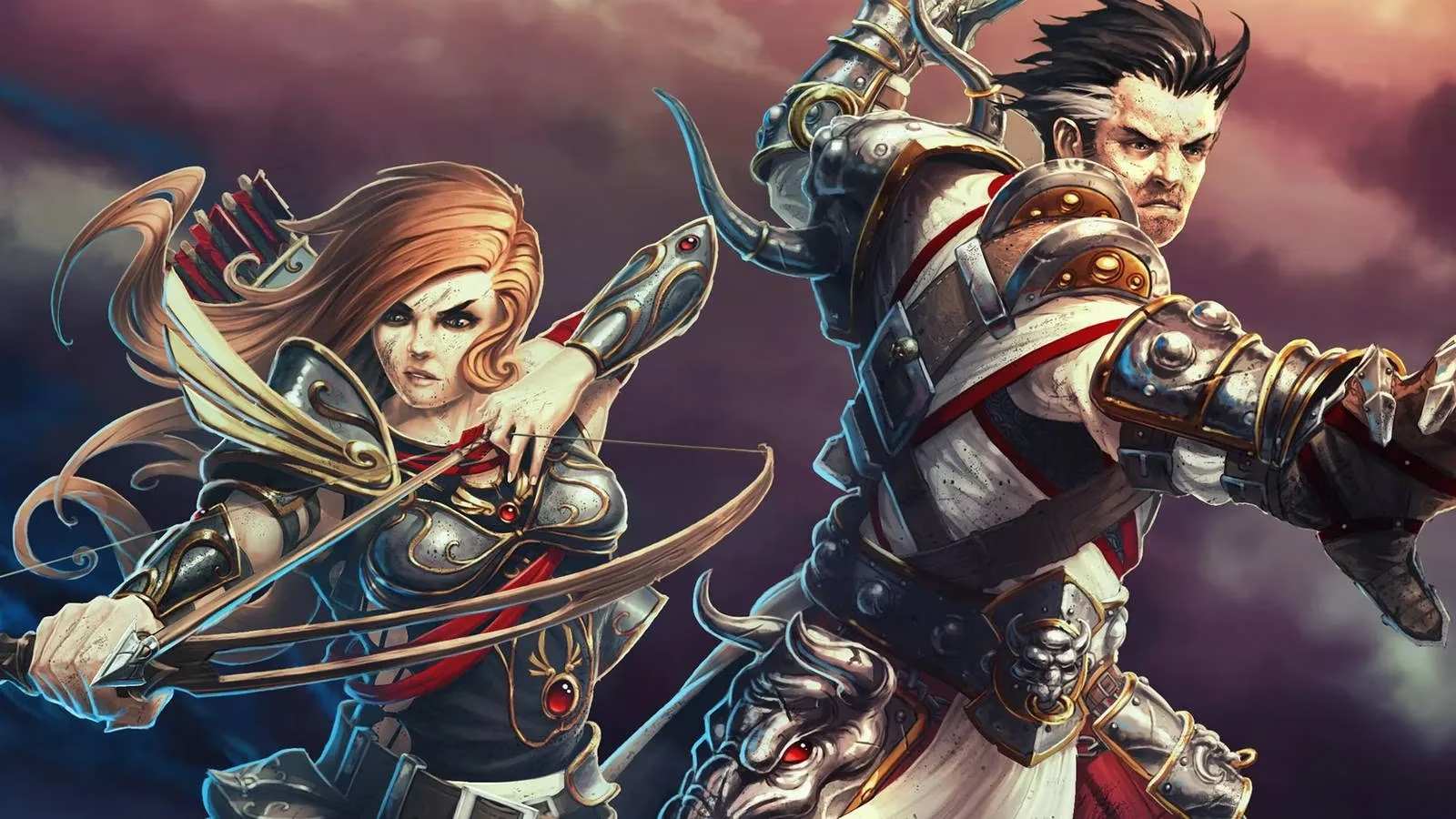
This is the core of it. The team's passion had shifted. In a recent conversation, Vincke put it plainly: "We're excited about what we're making, which is already a step in the right direction, because we weren't excited about what we were making back when we were doing the D&D thing." That statement resonates deeply with me as a player. I want to play a game made by developers who are on fire with passion for their own world, not just expertly managing someone else's. The Divinity universe—with its quirky, chaotic, and deeply systemic soul—is their child. They invented its rules, its lore, its very physics. Returning to it isn't a step back; it's a liberation.
Let's be clear: Baldur's Gate 3's success was no accident. It proved Larian's mastery. Just look at the legacy of characters like Karlach, whose story touched millions.
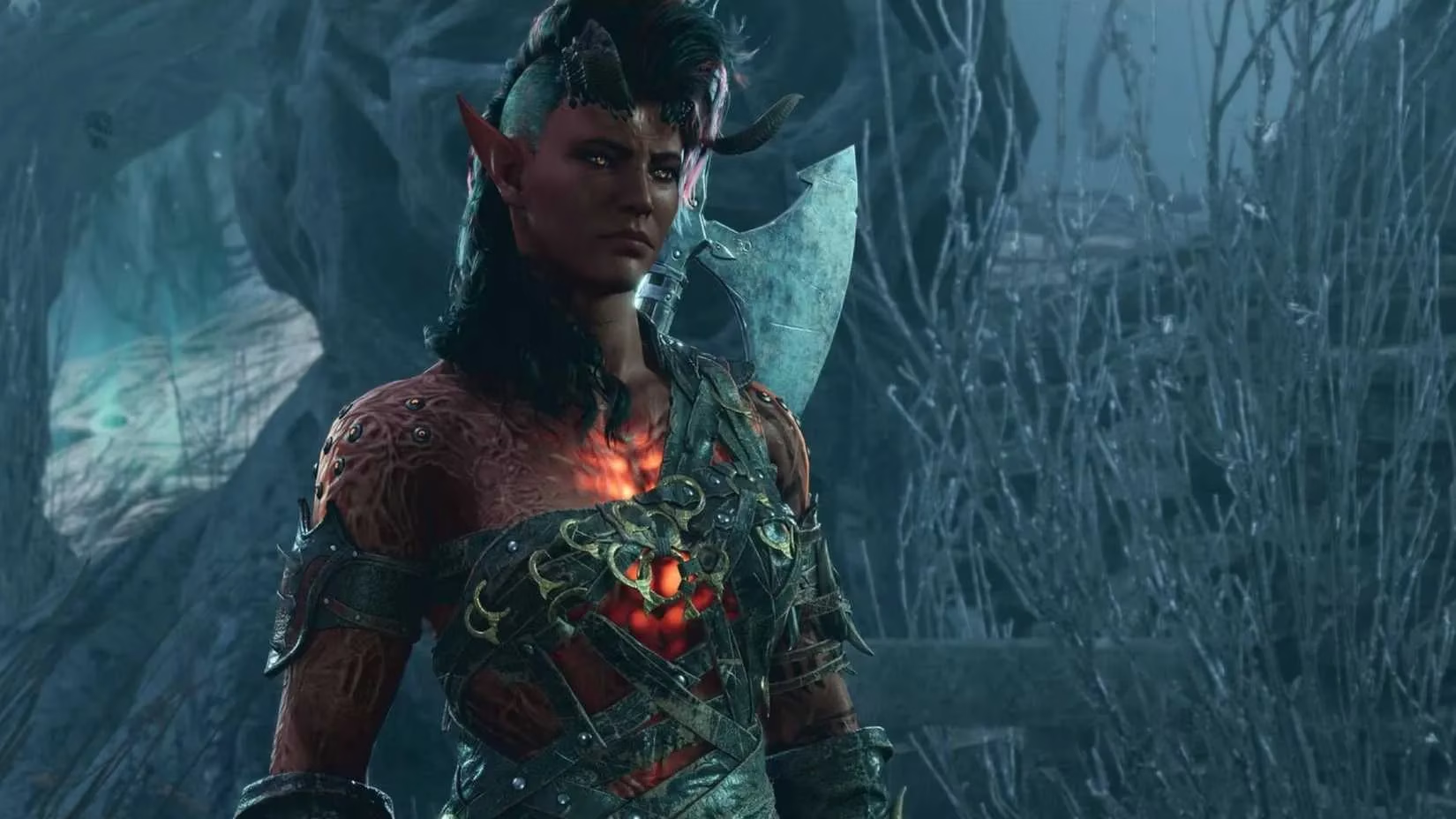
But imagine that same narrative prowess and technical genius, now completely unfettered. Vincke says their ambitions are high and they want to innovate. "That means that we will fail on certain things, because we're trying new things," he admits. That's the kind of brave, honest development philosophy that leads to true evolution. I'd rather play a game that stumbles while reaching for something revolutionary than one that plays it safe within established boundaries.
The potential for the new Divinity project is staggering. Consider what freedom might allow:
🚀 Unprecedented Systemic Depth: Remember the environmental interactions and elemental combos in Divinity: Original Sin 2? Now, with the budget, experience, and technology from BG3, those systems could become the foundation of an entire living world.
⚔️ Combat Without a Handbook: No need to check if a creative spell or ability is 'rules-as-written.' Larian can design combat purely for fun, challenge, and cinematic spectacle, potentially merging real-time and turn-based ideas in ways D&D never could.
🌍 A Truly Reactive World: Their own IP means they can make lore changes on the fly, let player choices radically reshape the world, and tell stories that aren't beholden to an existing canon.
Of course, there are unknowns. There's no release date yet, though the studio is open to using an early access model again—a process that served them incredibly well with both DOS2 and BG3. This means we, the community, might get to shape this journey alongside them once more, which is an exciting prospect in itself.
So, while I'll always cherish my adventures in Baldur's Gate, my gaze is firmly fixed on the future. Larian is returning to its roots not out of necessity, but out of a renewed and liberated passion. They are architects building their own palace again, brick by magical brick, and I can't wait to see—and play—in what they create. The shackles are off. The canvas is blank. And for the first time in years, with the full might of their experience, they are painting solely for themselves and for us. That's a story worth being excited about.