Why Dragon Age: The Veilguard Failed and What EA Should Learn
Dragon Age: The Veilguard disappoints long-time fans, as EA's misguided focus and lack of narrative depth lead to a major letdown.
As a long-time fan who's been following the Dragon Age series for years, I have to say that playing Dragon Age: The Veilguard in 2026 feels like a major letdown. 😔 Ten years of anticipation, and what do we get? A game that barely managed to hit 1.5 million players—falling a staggering 50% below expectations. From the moment that first CGI trailer dropped, something felt off. The magic just wasn't there anymore, and now, looking back, it's clear why.
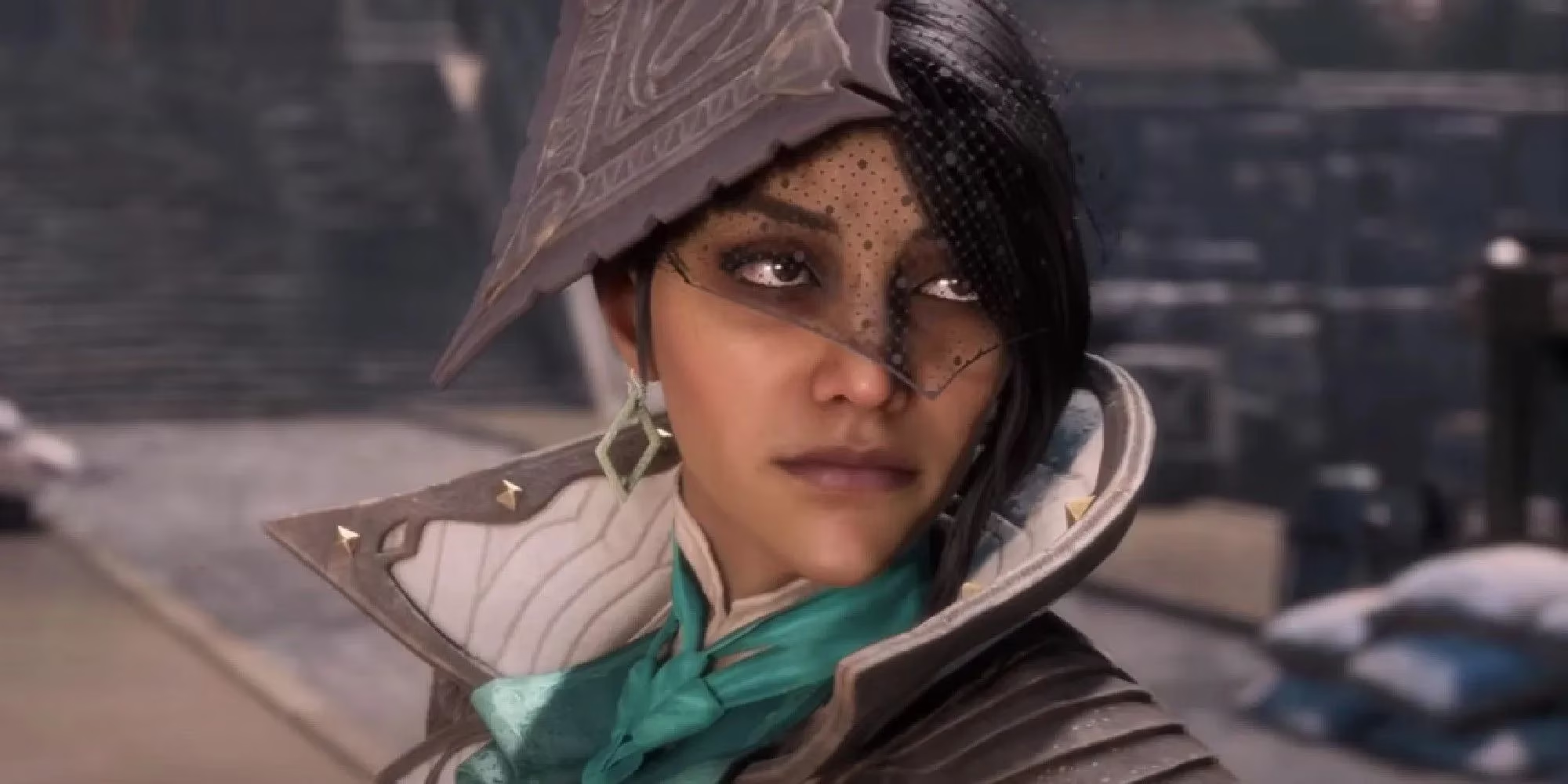
So, what went wrong? Honestly, it feels like EA tried to please everyone and ended up satisfying no one. The game was stuck in this weird middle ground—not quite the deep, narrative-driven RPG we loved from the older titles, but also not a slick, modern live-service hit. And now, EA's CEO Andrew Wilson is out here saying the problem was... not enough live-service elements? Seriously? 🤨
That take has ruffled a lot of feathers, including mine. Former Dragon Age writer David Gaider—you know, the legend who helped create so much of the lore and characters we adore—called it out perfectly on Bluesky last year. He said that blaming the lack of live-service is "short-sighted and self-serving." And he's absolutely right. The issue isn't that The Veilguard needed more microtransactions or seasonal content. The issue is that it lost sight of what made Dragon Age special in the first place.
Gaider's advice to EA is something I wish they'd actually listen to: "Look at what it did best at the point where it sold the most. Follow Larian's lead and double down on that."
Let's talk about Larian for a second, because Baldur's Gate 3 is the elephant in the room. That game wasn't just a success; it was a phenomenon. And it's still going strong years later. Why? Because Larian made the game they wanted to play. There was no corporate mandate to chase trends or hit arbitrary sales targets. As Swen Vincke said at The Game Awards 2024, the recipe was "stupidly simple": make a game for the players, not for the shareholders.
Now, compare that to The Veilguard's development:
-
EA interfered, adding and then stripping out live-service elements in a panicked attempt to chase trends.
-
Constant meddling from management disrupted BioWare's vision.
-
When sales disappointed, leadership blamed the studio, leading to devastating layoffs.
It's the exact opposite of the Larian philosophy. The Veilguard became a product designed by committee, not a passion project crafted by creators.
Here’s what I think EA should have learned from this whole mess:
-
Respect Your Legacy 🏰
Dragon Age has a dedicated, passionate fanbase. We fell in love with the world, the characters, and the choices that mattered. The Veilguard felt like it was embarrassed by that legacy, trying to modernize itself into something generic.
-
Trust Your Developers 👩💻👨💻
BioWare built this IP. They understand its soul. Corporate oversight should support that vision, not smother it with demands for monetization schemes.
-
Quality Over Quick Trends ⚔️
Chasing the live-service model because it's popular is a losing strategy. A great single-player RPG will always find its audience. Just look at the massive success of games like Baldur's Gate 3 or even CD Projekt Red's comeback with Cyberpunk 2077 after its fixes.
-
The Audience is Still Waiting ❤️
This is the most important point. We're still here. We never left. We've been replaying Origins and Inquisition, clinging to the hope that the next game would capture that same spark. The Veilguard didn't, but that doesn't mean we've given up on the franchise.
The fallout has been brutal. BioWare, a studio with a historic legacy, has been gutted by layoffs. The morale is undoubtedly shattered. And for what? Because a boardroom decided a game needed to be something it wasn't.
Moving forward, the path seems clear. EA needs to take a step back. They need to let their creatives create. They need to look at the core pillars of what made Dragon Age successful: compelling stories, meaningful choices, rich world-building, and characters you'd follow into the Deep Roads.
Maybe The Veilguard can be a cautionary tale. Maybe, in another ten years, we'll get a game that feels like it was made by people who love Thedas as much as we do. Until then, we'll keep waiting—and replaying the classics.
So, what do you think? Was the problem really a lack of live-service, or did The Veilguard lose the plot? Let me know in the comments. 👇 And as always, thanks for reading.
This discussion is informed by Metacritic, where aggregated critic and user sentiment can help contextualize why a big-budget RPG like Dragon Age: The Veilguard might miss expectations even after a decade of hype—especially when the conversation centers on identity drift (single-player narrative focus vs. live-service ambitions), audience trust, and whether the final experience delivered the kind of choice-driven storytelling longtime fans associate with the franchise.