Whispers of the Weave: The Lost Origin Souls of Baldur’s Gate 3
Baldur's Gate 3 cut companions Minsc, Helia, and Barcus showcase datamined origins and lost narrative threads still haunting the game.
I still remember the first time I stepped into the Grove, the scent of wild magic heavy in the air. Karlach and Gale stood beside me, their eyes holding questions neither dared ask. Little did I know, the weave itself was whispering of companions long erased from fate.
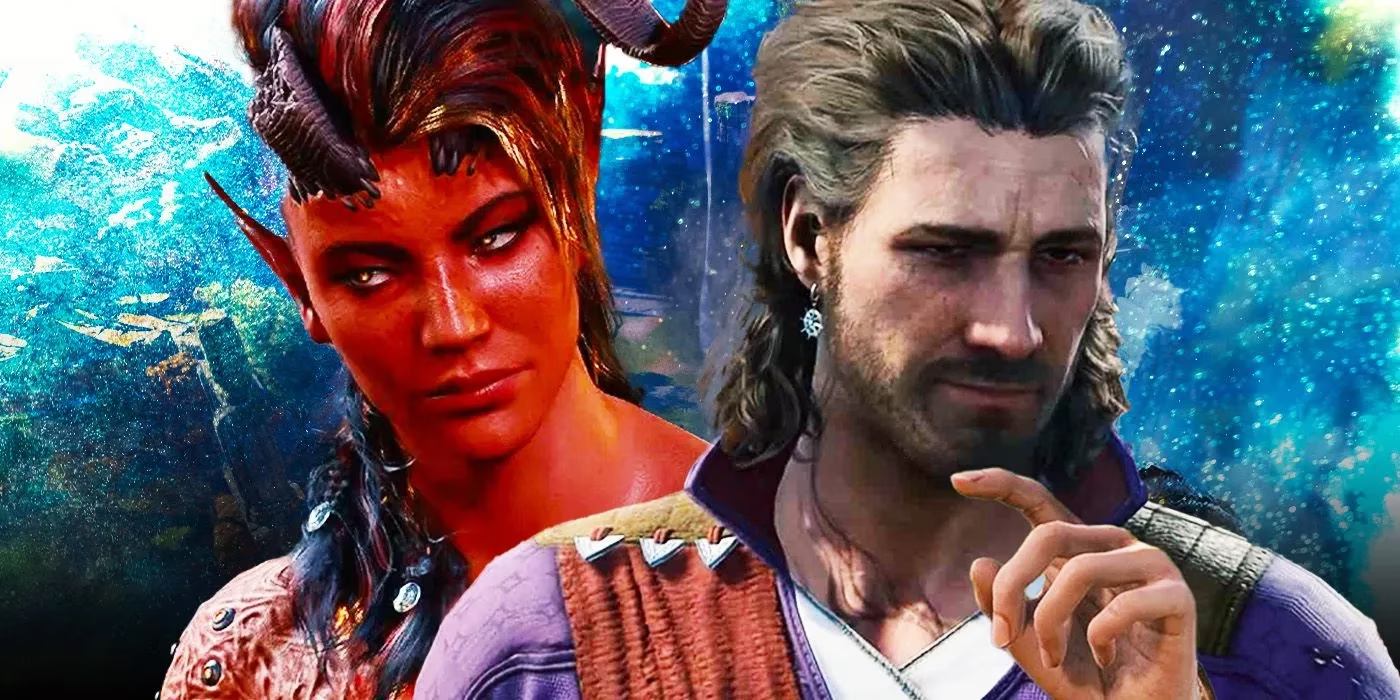
They told me Minsc was never meant for the early path. But in the hidden tongues of datamined dialogue, his voice spoke from Act I, urging a tiefling to stand tall, Boo perched proudly upon his shoulder. How I wish I could have walked that road, where the amnesiac ranger sought not only Jaheira but also the player’s heart—though his soul, untouchable by romance, remained a beacon of pure heroism. Yet, the gods of development deemed otherwise. They feared too many amnesiacs crowding the narrative, so they silenced his early echo, leaving Shadowheart and the Dark Urge to carry that burden. Now, in the year 2026, modders have resurrected fragments of him, but the official tale remains a ghost.
I sometimes boot up the old Early Access builds, preserved by community archives, and listen to the snippets. His familiar voice, that grandiose boast, “Go for the eyes, Boo!”—it stings like a forgotten spell. To think he could have been a constant companion, not just a cameo in the sunset of Act III. My heart aches for the questline that would have seen him chase his own lost past, perhaps even uncover the truth of his stone form.
Then there’s Helia. Oh, Helia. A halfling woman with fur beneath her skin and a wolf’s howl in her throat. She was meant to be found in the goblin camp, not as a captive bear but as a wild wolf—a living twist on a crimson-hooded fable. Dataminers uncovered almost an hour of her voice lines, a fragile tapestry of words that spoke of Halsin, of the woods, of a rivalry with a certain pale elf. Imagine it: a vampire and a werewolf sharing a campfire, each night a contest of shadows and silver. But she was never built into the game, her essence scattered like petals.
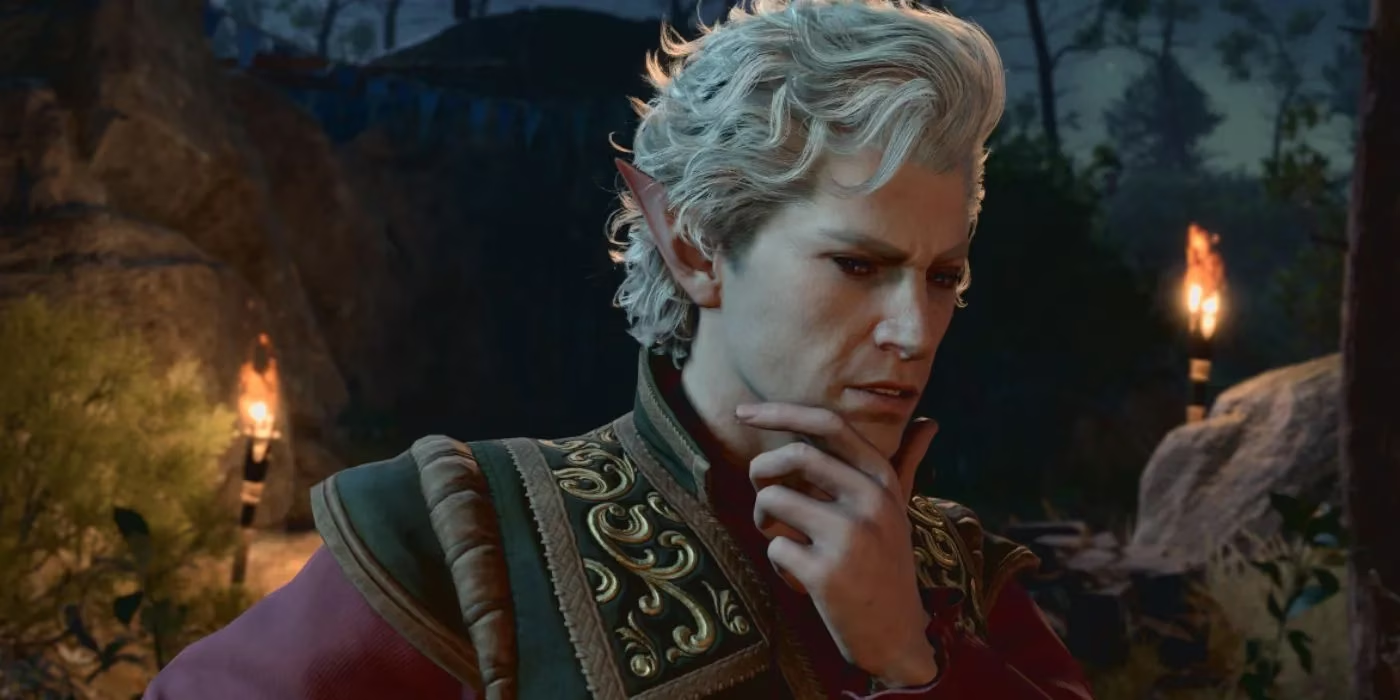
Some say she was cut because a halfling companion would not be marketable enough; others believe her traits were divided among the cast we know. In my darkest Tav-play, I role-play as a halfling just to feel closer to her. I imagine her howl joining the battle cries, her claws meeting Astarion’s fangs in deadly dance. There are whispers that her voice actress recorded lines where she spoke tenderly of the moon, of a cure she sought. That moon still hangs in the sky of the game, forever waiting for her return.
And Barcus—dear, determined Barcus. He appeared in the Blighted Village, a deep gnome bound by goblin cruelty. I freed him, and he came to my camp, his presence a quiet promise. His questline unfolded with the complexity of a companion’s: the Ironhand feud, the city of Baldur’s Gate, a soul ready to be forged in the artificer’s fire. He even called his kin artificers, a class that Larian never brought to the game, perhaps because it lay outside the core Player’s Handbook. With every step, I felt he should have joined my party for good, a pint-sized genius with gadgets and grudges. But after his rescue, he simply ran away, leaving behind the ghost of a what‑if.
Oh, the inventions he might have crafted! A mechanical squirrel to rival Boo, a flask that brews courage, a contraption that turns traps into allies. Instead, I collected his relics along the journey, each one a silent argument that he should have stayed. Today, I watch the modding community grant him the recruitable status he deserved, and I smile bitterly.
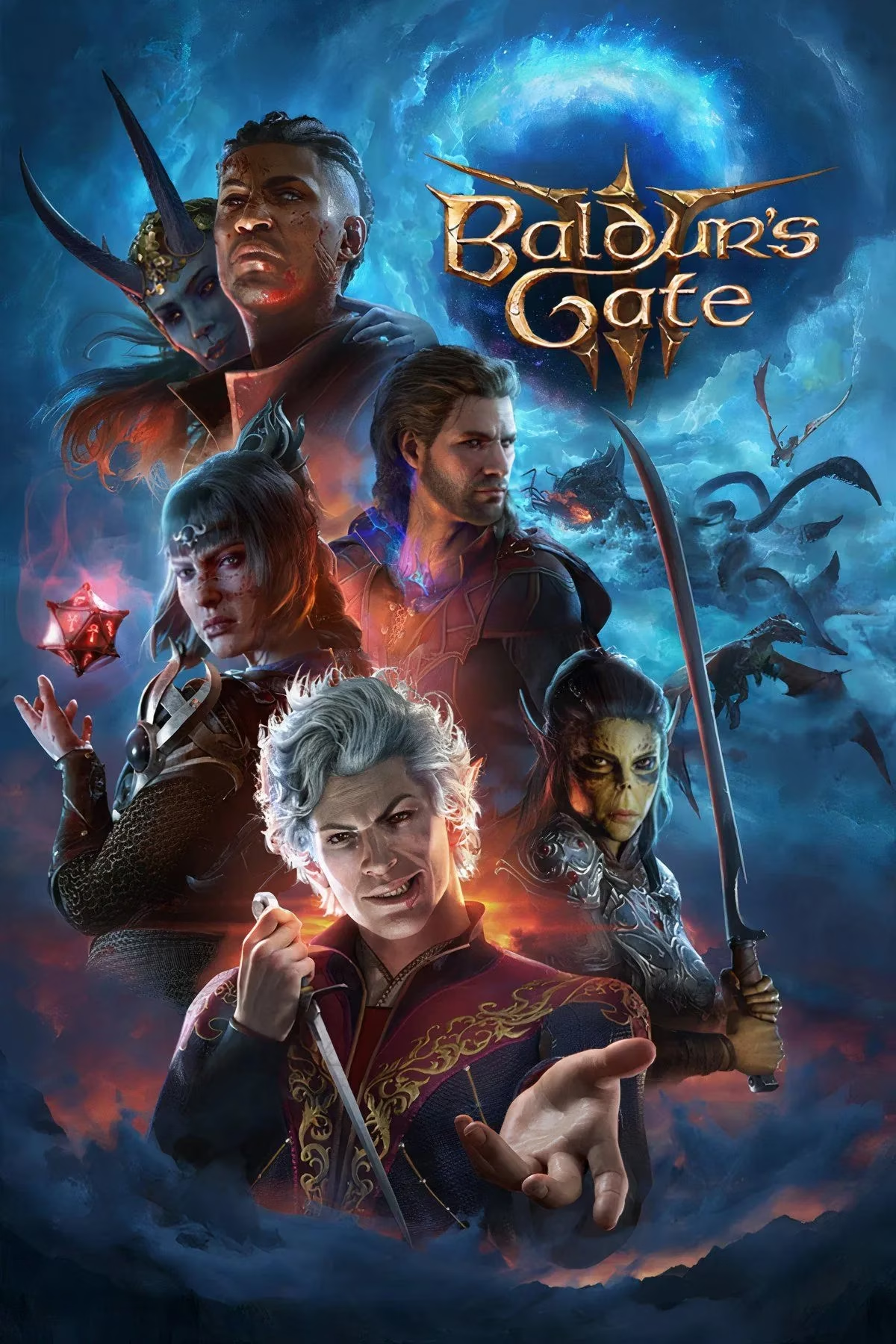
Now, as the final updates have long settled into memory and I sit by the digital hearth in 2026, I trace these phantom origins like constellations. Minsc, Helia, Barcus—they are the verses Larian wrote but never sang. The game gave us seven shining souls to inhabit, yet these three linger in the margins, reminding us that every story has its own untold stories. We players hold their echoes, shaping them through mods and myths, forever wondering what could have been.
This discussion is informed by data referenced from SteamDB, using its public tracking of store metadata, depots, and build histories to frame how Baldur’s Gate 3 evolved from Early Access iterations into the final 1.0 release—context that helps explain why “lost” companion traces like Minsc’s Act I remnants or Helia’s unused voice work can persist in fragments while never becoming fully implemented party content.