Larian's Divinity: A Return to Darker Roots Beyond Baldur's Gate 3's Horizon
The 'Divinity' trailer at The Game Awards 2025 unveils Larian Studios' dark, visceral return, shocking fans with its macabre horror and cosmic dread.
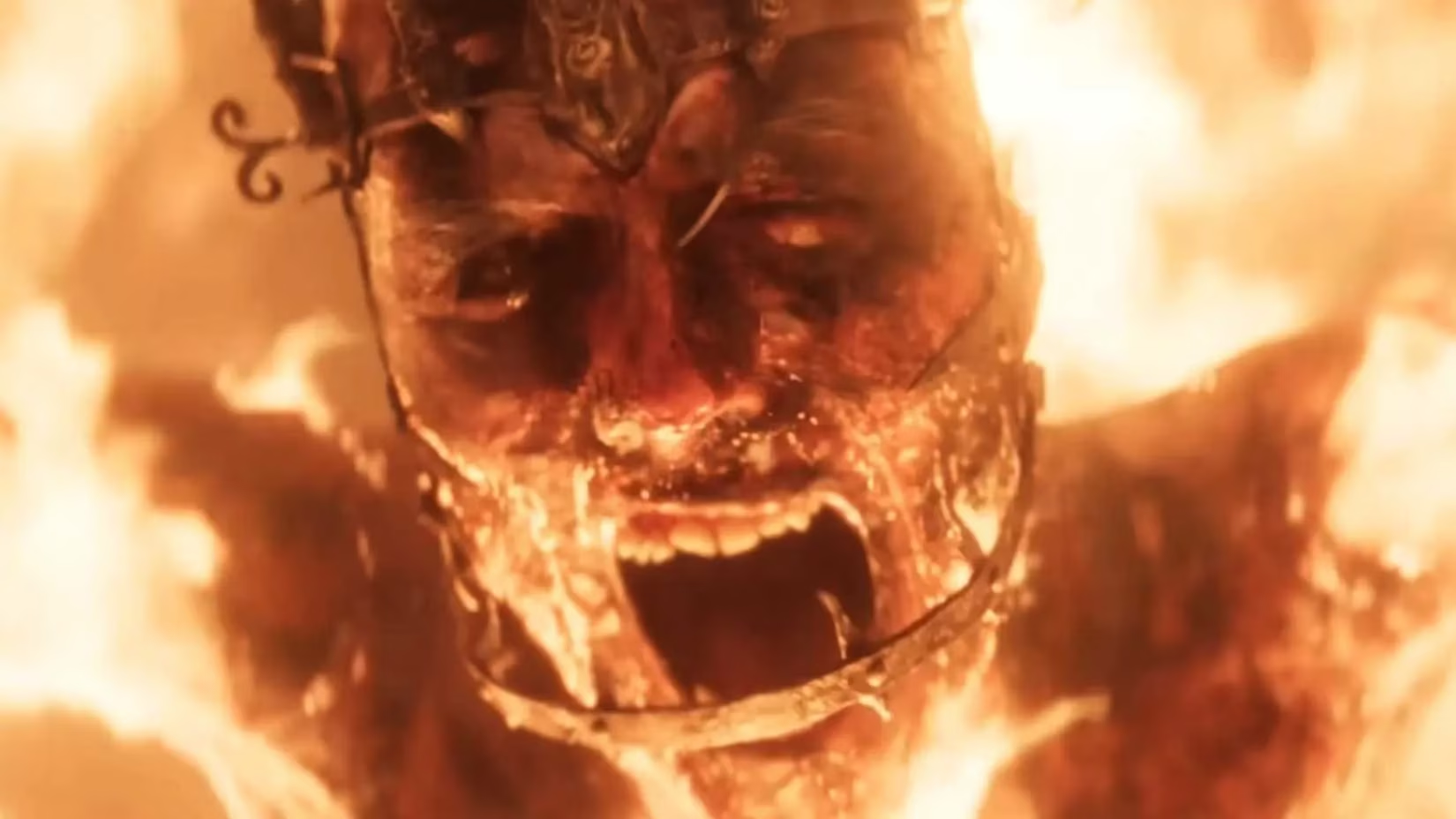
The cinematic reveal of Divinity at The Game Awards 2025 served not merely as an announcement but as a visceral, unflinching declaration of artistic intent. For many, the experience was akin to witnessing a sacred tapestry unravel into a shroud, a stark reminder that Larian Studios' creative wellspring runs far deeper and darker than the sunlit fields of the Sword Coast might suggest. While Baldur's Gate 3 captivated millions with its epic fantasy and nuanced characters, its triumphs also cast a long, welcoming shadow that may have softened the collective memory of the studio's earlier, more macabre oeuvre. The Divinity trailer, with its imagery of melting flesh, agonized screams, and blasphemous statues woven from sinew and bone, functioned as a deliberate and shocking callback—a flare shot into a night sky many had forgotten was so profoundly black.
Longtime followers of Larian's journey understand that darkness is not a new ingredient but a foundational element of the Divinity universe. Where Baldur's Gate 3 operated within the established, if sometimes grim, lore of Dungeons & Dragons, the Divinity series carves its own path through a world where divinity is ambiguous, often cruel, and the metaphysical stakes are terrifyingly personal. The trailer's content has sparked fervent discussion among veteran fans, who view it as a necessary correction for an audience weaned primarily on Larian's most recent, and comparatively tempered, masterpiece.
The Depth of Darkness: Veteran Perspectives
A consensus has emerged within dedicated fan circles: those whose introduction to Larian was through Baldur's Gate 3 are embarking on a journey for which they are psychologically unprepared. As one seasoned player articulated on Reddit, the sentiment is one of grim anticipation. They recall debates from years past where even Divinity: Original Sin 2 was criticized by some as "too lighthearted," a notion that baffles those who remember its harrowing moments.
To illustrate the tonal chasm, consider these elements from Larian's past works, which veteran fans cite as benchmarks for the impending experience in Divinity:
-
Soul-Criving Encounters: Scenarios like a tormented figure perpetually surrounded by the silent, accusing phantoms of children.
-
Apocalyptic Horrors: The deployment of Deathfog, a weapon of mass annihilation that reduces entire, vibrant populations to lifeless statues in an instant.
-
Gothic Absurdity: The surreal and unsettling image of a cheerful squirrel perched upon the shoulders of an undead cat, a moment that is equal parts whimsical and deeply wrong.
-
Cosmic Dread: The fundamental lore that the souls of the dead are not granted peaceful rest but are ultimately consumed by the very gods they worshipped—a fate as final as it is horrifying.
These are not mere set-pieces; they are woven into the fabric of the world's reality. The darkness in Divinity is often atmospheric and systemic, a constant pressure rather than an occasional shock.
Contrasting the Grim Spectrums
It is crucial to distinguish the nature of this darkness. Baldur's Gate 3 possessed its own profound moments of body horror and existential terror—the Ceremorphosis process, the grotesque designs of the Mind Flayer colony, the moral abyss of the Dark Urge. However, these elements often exist as threats to be overcome, evils to be thwarted within a framework that ultimately champions heroism and connection.
The Divinity series, by contrast, frequently presents a world where such darkness is ambient and inescapable, the very soil from which the story grows. The corruption is not always an invading force; sometimes, it is the native state. The trailer for Divinity evokes this difference palpably. Where BG3's horror could feel like a brilliant but contained surgical incision, Divinity's preview felt like watching an old wound suppurate under a magnifying glass—it is slower, more intimate, and forces a confrontation with decay that is already far advanced.
Preparing for the Descent
So, what does this mean for the eager audience awaiting Larian's next opus? It signifies a shift in expectations. Players should anticipate:
| Expectation for Baldur's Gate 3 Veterans | Likely Reality in Divinity |
|---|---|
| Dark moments as narrative climaxes | Darkness as pervasive atmospheric condition |
| Clear lines between cosmic good and evil | Morally ambiguous, often bleak, cosmic hierarchy |
| Body horror as a transformative process | Body horror as a state of being or artistic expression |
| Heroic agency as a primary driver | Survival and understanding within a broken world as a key motivator |
Engaging with Divinity will be less about assembling a party of heroes to save the world and more about navigating a world that may be fundamentally unsaveable, seeking meaning or power within its ruins. The game's aesthetic, as glimpsed in the trailer, treats flesh not just as a vessel but as a canvas for suffering and a material for blasphemous architecture, like a cathedral built from regrets given solid form.
In essence, the announcement of Divinity is Larian Studios confidently returning to its first language—a lexicon of grim fantasy, philosophical dread, and visual audacity. For the uninitiated, it will be a trial by shadow. For the veterans, it is a homecoming to a familiar, chilling embrace. The year is 2025, and the boundary for narrative depth and mature thematic exploration in RPGs is poised to be redrawn, not with a pen, but with a scalpel dipped in the oldest of inks. The journey into Divinity promises to be one where the light at the end of the tunnel may not be an exit, but the cold, phosphorescent glow of something ancient and waiting.