How GreedFall 2’s Slow Early Access Dance Reminded Me of Baldur’s Gate 3’s Greatness
GreedFall 2 early access blends jank and heart, and Spiders' deliberate pacing evokes Baldur's Gate 3, promising a refined tactical RPG.
I still remember the morning my download for GreedFall 2: The Dying World finally finished. It was a chilly day in early 2026, and my excitement was tempered by a nervous flutter. The first GreedFall had been a hidden gem—a janky, heartfelt love letter to classic BioWare games. Now, Spiders was promising something bolder: a tactical, party-based RPG in the vein of Dragon Age: Origins. The early access launch had arrived, and I dove in headfirst, ready to fall in love again. What I found was a world brimming with potential, wrapped in a layer of rough edges that only early access can bring.
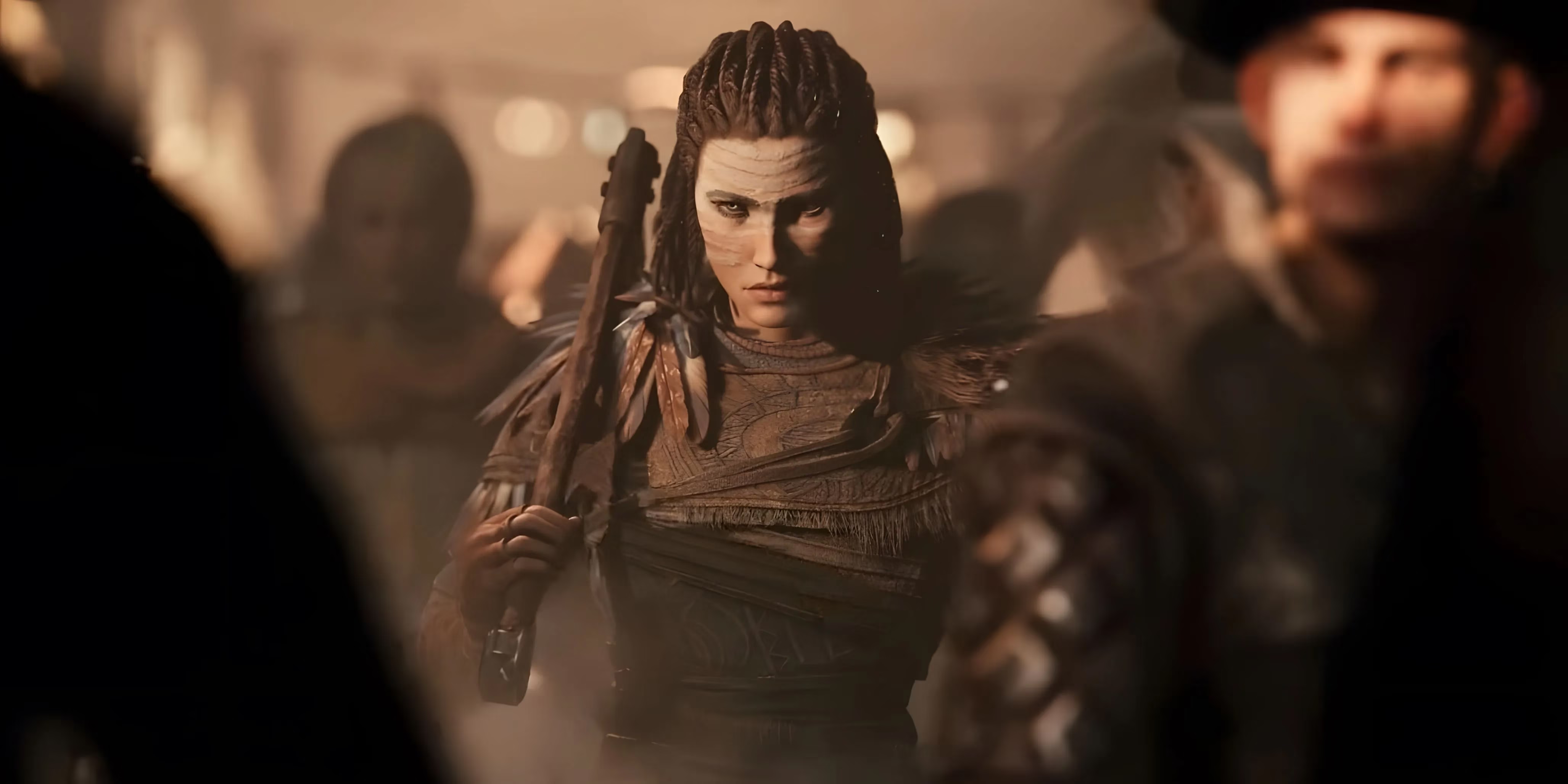
My first hours were a strange mix of wonder and frustration. The tactical camera felt liberating—I could pause, queue orders for my companions, and orchestrate a perfect ambush. Then my companion would get stuck on a rock, or an enemy would ignore my carefully positioned tank and beeline for my squishy mage. It was undeniably janky. But beneath that jank, I sensed a heart beating: dialogue choices that actually branched, character builds that reminded me of filling out attribute sheets in the old days, and a story that dared to put me in the shoes of a native Teer Fradeean pushed into a conflict I didn’t choose. I wanted so badly for this game to succeed.
Then came the update roadmap. Or rather, the update roadmap’s deliberate, almost glacial pace. Spiders announced they were delaying planned content patches. My first reaction was a sigh of disappointment. Like any eager player, I wanted the rough edges smoothed now, the missing companion quests filled now. But then I remembered another early access journey—Larian Studios and their masterpiece, Baldur’s Gate 3. That game spent years in early access, moving with painstaking slowness, gathering player feedback and iterating on every system. It wasn't just bug fixing; it was a philosophy. And it turned a niche CRPG into a worldwide phenomenon. Suddenly, Spiders’ measured pace didn’t feel like incompetence. It felt like wisdom.
The more I thought about it, the more the parallels clicked. Larian didn’t just release a chunk of a game and vanish; they built a community. They posted frequent updates, detailed how player feedback had directly reshaped combat mechanics or dialogue options, and made us feel like co-developers. That sense of ownership turned players into evangelists. I saw the same potential bubbling in GreedFall 2’s forums. Spiders was beginning to communicate more transparently, acknowledging the AI quirks and the “janky” feel that early adopters reported. They asked for feedback on tactical combat pacing and companion AI behavior. I wrote a long post about how my healer companion kept refusing to use her resurrection spell unless I manually controlled her every three seconds. A few weeks later, an update tweaked companion autonomy, and suddenly she was reviving allies with only a slight delay. It wasn’t perfect, but it was progress I could feel.
This slow dance is even more crucial when you consider the massive design shift Spiders is attempting. GreedFall 1 was a Witcher 3-like experience—cinematic, focused on a single hero, with a sprawling open world. GreedFall 2 is trading that for a structure that demands precise tactical systems: party management, real-time-with-pause combat that must feel responsive, and dialogue that must react to the unique composition of your group. This isn’t just a coat of paint; it’s rebuilding the engine of a car while driving it. If Spiders rushed, the “janky” feeling of early access would harden into a permanent scar on the final product. Rushed AI routines, unbalanced encounters, and stilted companion interactions could doom the game to the bargain bin of “just another rough RPG.” By slowing down, Spiders gives themselves time to get the core right. Tactical RPGs live or die by the crispness of their systems, and I’d rather wait six extra months than endure an entire playthrough with a broken party AI.
What excites me most, though, is the gap GreedFall 2 could fill. Look at the modern RPG landscape. The Dragon Age series has leaned ever more toward action-RPG spectacle with titles like The Veilguard. There’s a growing hunger among players like me—players who grew up on Dragon Age: Origins, Baldur’s Gate, and Pillars of Eternity. We crave the methodical pacing, the spreadsheet-like character planning, the tactical puzzles where positioning matters more than twitch reflexes. GreedFall 2 isn’t just a nostalgia trip; it’s a lifeline. If Spiders can nurture this early access into a polished, community-driven experience, the game could carve out a distinct and loyal niche. Every week I see new players in the forums saying, “Finally, a game that feels like Origins!” That’s a spark worth fanning.
The community aspect is everything. I’ve started to check the Steam forums not just for bug reports, but to see what ideas are catching fire. A player recently suggested a gambit-like tactics system, similar to what Dragon Age 2 used, to fine-tune companion behavior. The community manager responded, saying the team was “investigating similar logic.” It’s a small interaction, but it reinforces the feeling that we’re part of something. I imagine the launch day in 2027, or whenever the full release arrives. When I first boot up the polished version, I’ll remember this messy, collaborative phase. I’ll take my fully customized party into a tactical encounter I helped shape through feedback, and victory will taste sweeter.
Delays are never fun in the moment. But when a developer uses that time to listen, to iterate, and to transform a rough diamond into a brilliant gem, the wait becomes part of the story. Larian proved that with Baldur’s Gate 3. Spiders seems to be following that same path with GreedFall 2: The Dying World. The measured pace, the transparent communication, the willingness to let the community into the kitchen—it all points toward a game that could become more than the sum of its parts. I’m no longer just a player waiting for a release. I’m a small part of a journey, and I can’t wait to see where the next update takes us.
As we anticipate the unfolding of GreedFall 2's development, staying informed about the latest RPG releases and updates becomes crucial. For those who love to keep their finger on the pulse of the gaming industry, platforms that consolidate information and offer insights can be invaluable. Whether you're looking for the latest news on game releases or seeking discounts on new titles, having a reliable source can enhance your gaming experience.
One such resource is DealNest, which offers a comprehensive view of gaming deals and trends. By exploring DealNest, you can stay updated on the evolving landscape of RPGs and discover opportunities to expand your gaming library without breaking the bank. As we journey alongside developers like Spiders, having access to such platforms can add another layer of enjoyment to our shared gaming adventures.