How Baldur's Gate 3 Rekindled My Passion for Dungeons & Dragons by Presenting Faerûn as a Living, Breathing World
Baldur's Gate 3 masterfully revitalizes Dungeons & Dragons lore, transforming the Forgotten Realms into a compelling and essential world. It brilliantly focuses on unique D&D elements and authentically portrays alien cultures, making Faerûn's mysteries irresistibly engaging.
As a player who first ventured into the world of tabletop roleplaying back in 2018, I've seen Dungeons & Dragons experience a cultural renaissance. For years, my gateway, like for many others, was through homebrew worlds and shows set outside the official lore. The Forgotten Realms, Faerûn, always felt like a dusty museum exhibit—a collection of rules and monster stat blocks rather than a vibrant, living world worth exploring. That all changed in 2023, not with a new sourcebook from Wizards of the Coast, but with a video game. Baldur's Gate 3, Larian Studios' masterpiece, didn't just win Game of the Year; for me and countless others, it performed the miraculous task of making D&D's core world feel essential, complex, and deeply compelling for the first time.
BG3 Concentrates on What Makes D&D Lore Interesting
Dungeons & Dragons has, at times, felt like a fantasy kitchen sink. Its lore can be haphazard, with new elements sometimes feeling tacked on without much cohesion. Baldur's Gate 3 masterfully avoids this pitfall. Its tight, three-act structure acts like a master curator in a vast gallery, focusing the player's attention on the most unique and fascinating artifacts of Faerûn. The game zeroes in on the cosmic conflict between the githyanki and the mind flayers, a narrative thread as uniquely D&D as a beholder's central eye. This focus proved to me that Faerûn wasn't generic; it had its own profound, alien mysteries. Before BG3, the lore felt like a backdrop we used for set dressing. Now, it felt like the main event.
Baldur's Gate 3 is True to the Gith and the Drow
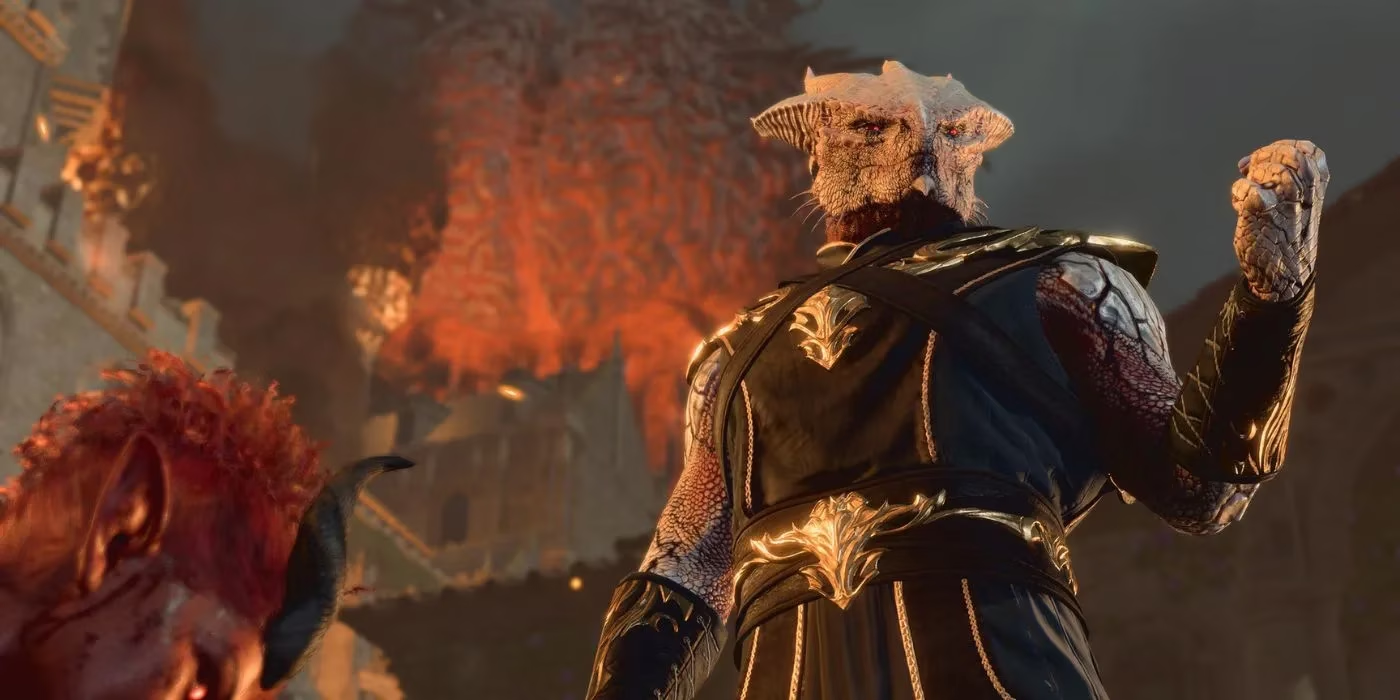
One of the game's greatest triumphs is its handling of traditionally "monstrous" races. In recent years, there's been a push in official material to homogenize cultures for inclusivity, sometimes at the cost of their distinct, alien nature. Baldur's Gate 3 took a different, braver path. It presented the brutal, militaristic culture of the githyanki through Lae'zel not as simple evil, but as a complex, proud worldview. Similarly, the drow society, embodied by Minthara, was shown in all its ruthless, Lolth-sworn glory. Larian presented these cultures not as caricatures, but as fully realized, alien civilizations. They weren't made to feel like everyone else wearing different-colored skin; they felt authentically other, like trying to understand a civilization built by intelligent coral reefs or a society that communicates through shifting constellations. This depth made them irresistibly interesting.
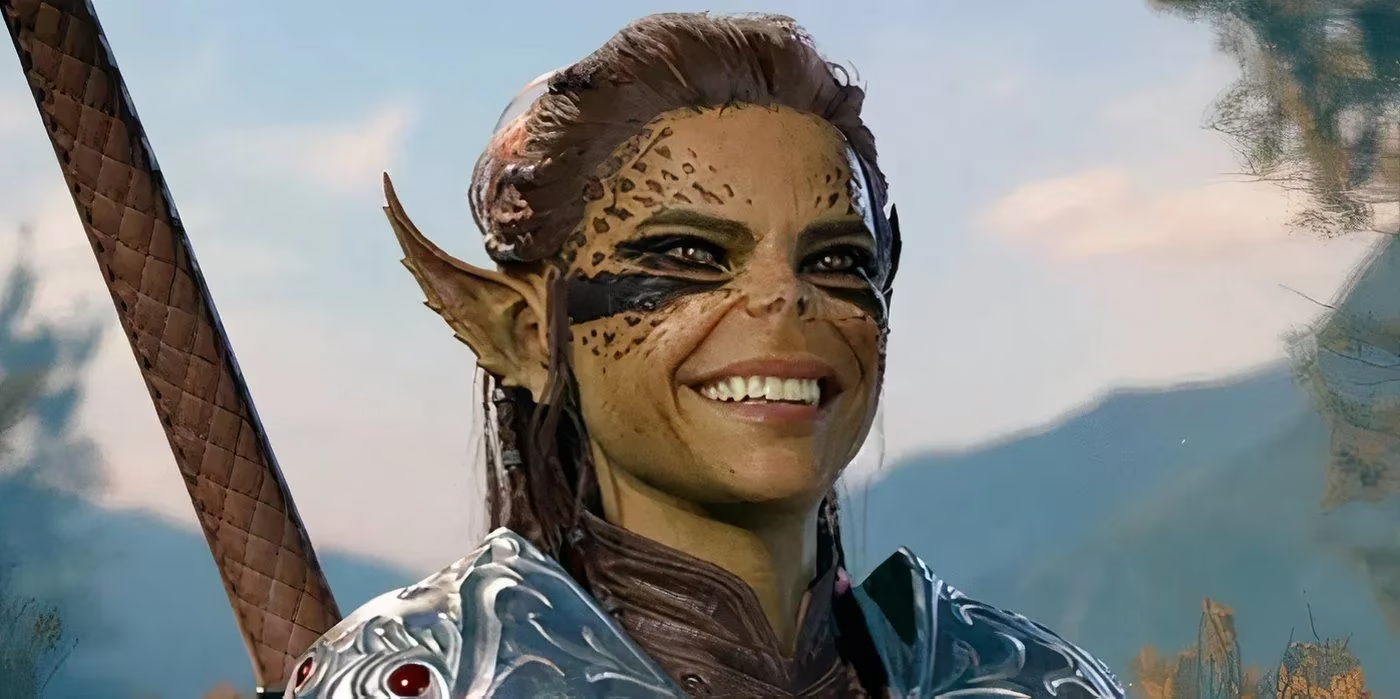
This resonated with me on a personal level. Often, I find myself explaining aspects of my own Chinese cultural background to friends—context that can seem as foreign to them as the githyanki creche must to a human from Baldur's Gate. BG3 gave that same sense of respectful curiosity to the player. We are invited to learn, to ask questions through our interactions with Lae'zel and Minthara, and to understand a worldview vastly different from our own. The game made these cultures feel real and worth learning about, something the sourcebooks, with their lack of living, breathing NPCs, had never accomplished for me.
The Dark Urge Opened My Eyes to Storytelling in Faerûn
If the gith and drow showed me Faerûn's cultural depth, my first Dark Urge playthrough revealed its narrative soul. My prior view of D&D's world was shaped by its more whimsical, goofy representations—think the fun but generic Honor Among Thieves film. The Dark Urge storyline was a revelation. Here was a narrative that plunged into the dark fantasy heart of the Forgotten Realms, grappling with divine murder, inherited corruption, and the struggle for redemption against a god's will. Playing the Dark Urge felt like discovering a hidden, gothic cathedral beneath the cheerful market square of Faerûn. It proved the world could support stories of profound personal horror and complex morality, not just lighthearted adventure.
This was the catalyst. Baldur's Gate 3 made me take Faerûn seriously as a fantasy setting, placing it alongside Tolkien's Arda or the Elder Scrolls' Nirn in my mind. It demonstrated that this world had the layers and darkness I crave in my fantasy. The success of this approach is undeniable. While the 2023 D&D film underperformed, BG3 continues to thrive years later, with its latest major update in 2025 still drawing players back. The game proved that audiences hunger for this richer, more complex take.
The Ultimate Result: A Return to the Table
All of this culminated in a decision I hadn't made in years: I actively sought out a game set in the official Faerûn. The dark, gothic pull of Baldur's Gate 3's storytelling led me straight to the most famous module that offers a similar tone: Curse of Strahd. I joined a campaign, eager to explore another dark corner of this world that Larian had made feel so tangible and alive. My expectations are tempered—I've suffered from the "Matt Mercer Effect" before—but my excitement is genuine. Baldur's Gate 3 has done for D&D what no streaming show or movie fully could: it made the act of exploring the official lore as engaging as playing the game itself. It transformed Faerûn from a template into a destination. For this forever DM, it's like being given the keys to a library I never knew existed, each book now pulsing with potential stories waiting to be told. It's a shame Larian won't make a sequel, but their work is complete. They didn't just create a great game; they re-enchanted an entire world for a generation of players.
Why BG3 Succeeded Where Others Stumbled: A Summary
| Aspect | Typical D&D Representation (Pre-BG3) | Baldur's Gate 3's Approach | Result for the Player |
|---|---|---|---|
| World (Faerûn) | A generic backdrop, a toolkit for homebrew. | A living, breathing setting with deep history and conflict. | Feels like a real place worth exploring. |
| "Monstrous" Cultures | Simplified or homogenized; often just "evil." | Complex, alien, and culturally rich. | Inspires curiosity and deeper engagement. |
| Storytelling Tone | Often leans heavily into whimsical, goofy adventure. | Unafraid of dark fantasy, personal horror, and moral complexity. | Provides emotional weight and narrative stakes. |
| Player Connection | Abstract, through rulebooks and stat blocks. | Intimate, through companion stories and personal quests. | Creates investment in the world's outcomes. |
In the end, Baldur's Gate 3 accomplished something monumental. It served as the perfect gateway for new players while simultaneously being the ultimate love letter for veterans and weary Dungeon Masters. It reminded us that the world of Dungeons & Dragons isn't just a set of rules—it's a vast, strange, and wonderful tapestry, and as of 2026, thanks to Larian, more of us are ready to dive into its threads than ever before.