Beyond the Party: Why Baldur's Gate 3's Photo Mode Must Embrace Its Camp Companions
Baldur's Gate 3's Photo Mode and its vibrant camp community offer a compelling canvas to immortalize your epic journey. Discover the profound narrative value of its quiet guardians and temporary souls, who are essential to the game's emotional tapestry.
In the sprawling, epic narrative of a game like Baldur's Gate 3, heroes are forged not only in the heat of battle against goblin hordes or mind flayer colonies but also in the quiet moments of respite around the crackling campfire. The long-awaited Photo Mode, arriving with the monumental Patch 8, promises to be a canvas for these memories. It offers a toolset of poses, stickers, and decorations to immortalize the player's unique journey across Faerûn. Yet, as players prepare to frame their triumphs and tragedies, a poignant question arises: who truly comprises the heart of this adventure? Is it solely the valiant band of adventurers, swords drawn and spells at the ready, or does the family extend to the gentle souls and enigmatic figures who find sanctuary within the camp's borders? To limit the art of remembrance to the playable party alone would be to tell only half the story.
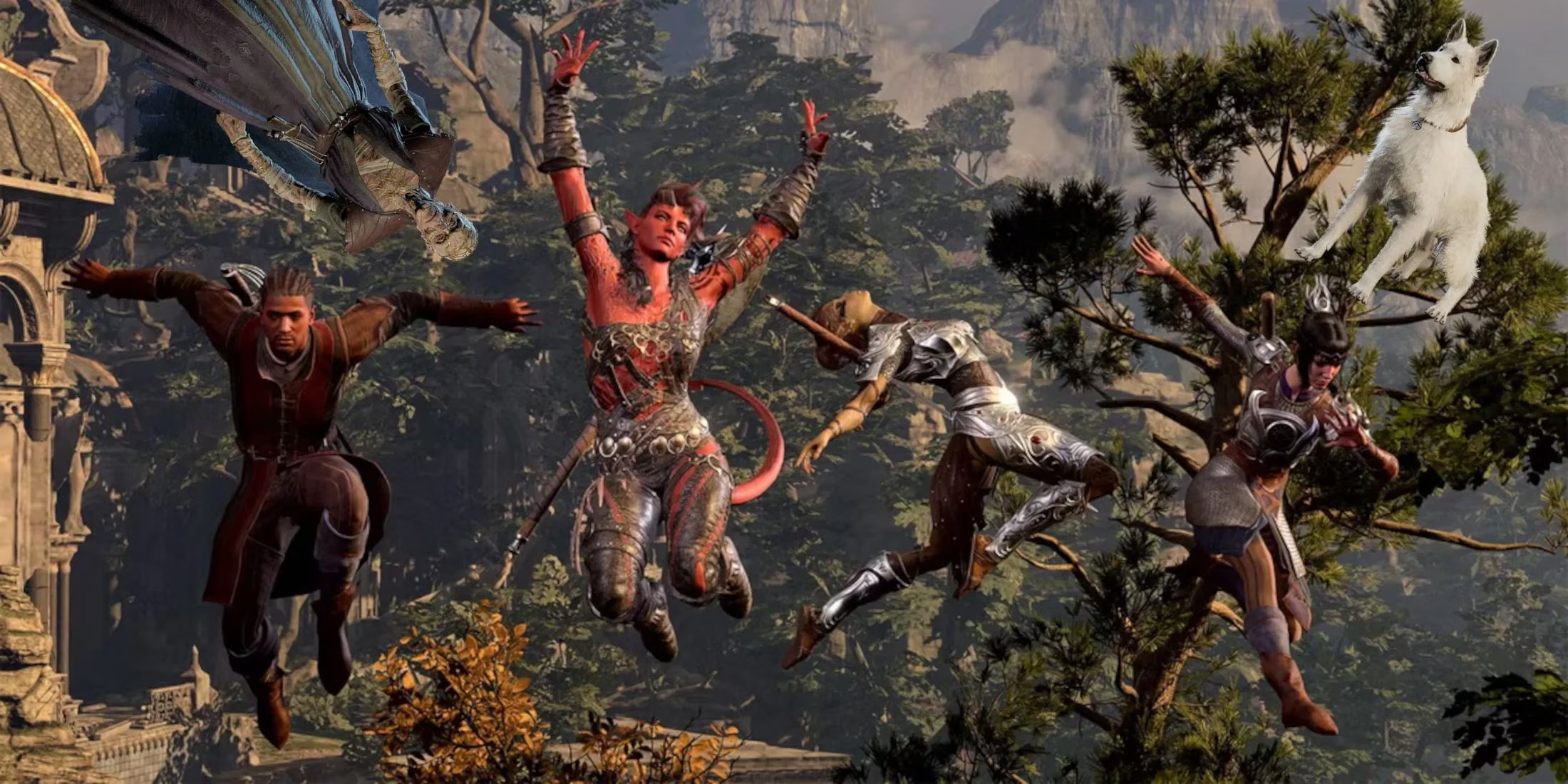
The Camp's Quiet Guardians
The camp is more than a mere staging ground; it is a living, breathing sanctuary that evolves throughout the harrowing journey. While the roster of ten recruitable companions forms the core, the space is perpetually enriched by a rotating cast of visitors and permanent residents. At its mystical center stands Withers, the skeletal scribe of fate, an unchanging pillar in the ever-shifting chaos. From him, players can summon hirelings to fill their ranks, but his value transcends mere utility. Is he not the silent witness to every resurrection, every daring class change, every whispered strategy formulated under the stars?
Then, there are the creatures who offer a different kind of solace. Scratch, the loyal canine mourning a lost master, and the once-ferocious owlbear cub, now a curious and playful charge, provide irreplaceable moments of levity. Their simple presence—a nuzzle, a playful pounce—can lift the gloom of the darkest quests. They are not mere set dressing; they are emotional anchors.
A Tapestry of Temporary Souls
The camp's population blooms with narrative significance. Consider the eclectic parade of souls who, for a time, call it home:
-
The Scholarly Visitor: Volo, with his eccentric charm and dubious magical wares, flits in and out, a recurring spark of chaotic energy.
-
The Refugees of Baldur's Gate: In Act 3, the young girl Yenna and her cat Grub seek permanent shelter, their innocence a stark contrast to the city's corruption.
-
The Celestial and the Devout: The majestic aasimar Dame Aylin and the devoted cleric Isobel bring with them tales of moonlit magic and profound love.
-
The Political and the Infernal: From the noble Duke Ravengard to the devilishly charming Mizora, the camp becomes a crossroads for the powers shaping the world.
And who could forget the raucous, one-night celebrations with the tiefling refugees or the unlikely goblin allies in Act 1? These events are foundational memories, yet how can they be properly commemorated if the guests of honor are relegated to the background of a photo?
The Art of Shared Memory
The teased features of Photo Mode—"tons of poses, stickers, and other decorations"—suggest a powerful toolkit for creative expression. The confirmation that playable characters and hirelings can be posed is a welcome start. But why stop there? The magic of photography lies in capturing relationships, emotions, and shared stories.
Imagine the possibilities if the camera's gaze could include these camp dwellers:
| Character | Potential Photo Mode Moment | Emotional Impact |
|---|---|---|
| Dame Aylin & Isobel | A tender, posed embrace under a moonlit sky | Celebrates a central love story, adding depth to the camp's narrative. |
| Scratch & the Owlbear Cub | A playful action shot of fetch or a gentle petting scene | Captures the heartwarming respite from the game's darker themes. |
| Withers | A rare, humorous pose—perhaps a celebratory jump (a fan-favorite fantasy) | Transforms an enigmatic figure into a participant in the crew's joy, acknowledging his iconic status. |
| The Dream Guardian / The Emperor | A posed, surreal portrait within the Astral Prism | Visualizes the profound and complex relationship with this guiding (and manipulative) force. |
To exclude these characters from interactive posing is to imply they are mere scenery. Yet, their roles are anything but passive. Scratch and the cub offer unwavering moral support. Withers holds the literal keys to life, death, and reinvention. These are not minor interactions; they are pillars of the gameplay and emotional experience.
A Legacy in Frames
As of 2026, Baldur's Gate 3 continues to be celebrated as a landmark in interactive storytelling. Photo Mode is a gift to the community, a way to honor the hundreds of hours spent in its world. However, its full potential is realized only when it reflects the full breadth of that world. The camp is a character in itself, defined by the sum of its inhabitants—both permanent and temporary.
Allowing players to pose, decorate, and include NPCs like Withers, the pets, and all the fleeting friends would transform Photo Mode from a simple snapshot tool into a true storytelling device. It would affirm that every soul encountered, every bond formed—whether with a silent skeletal scribe or a loyal dog—is an integral thread in the grand tapestry of the player's adventure. After all, what is a hero's journey without the companions, both expected and unexpected, who make the camp—and the heart—feel like home?