Baldur’s Gate 3 in 2026: The Legacy of Patch 8 and a Final Farewell to Faerûn
Baldur’s Gate 3 Patch 8 delivers full cross-platform play, Photo Mode, and 12 new subclasses, cementing its legacy as a beloved RPG.
Three years after its landmark launch, Baldur’s Gate 3 has settled into a state of quiet maturity. By 2026, the sprawling RPG that once dominated award shows and late-night gaming sessions has reached a definitive form. Developer Larian Studios, having nurtured the game with over a year of free, substantial updates, delivered its last major gifts in 2025 and then gently stepped away from active development. The result is not an abandoned world, but a polished, complete masterpiece supported by a thriving community. The journey that began in 2023 felt truly final when Patch 8 arrived, bringing with it the weight of closure and a few final surprises that reminded everyone why Larian became a household name among role-playing enthusiasts.
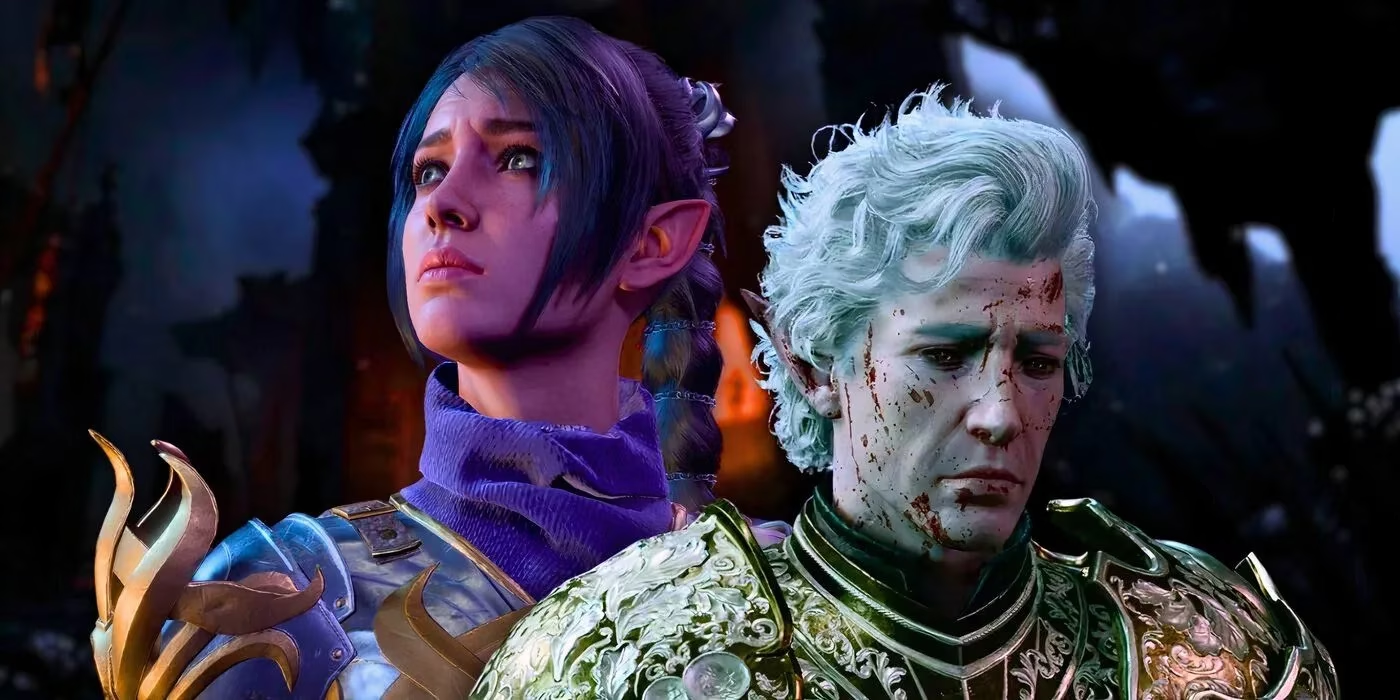
Patch 8: The Last Grand Gesture
When Larian announced Patch 8 for a 2025 release, many players felt a bittersweet mix of excitement and melancholy. It was framed as “one more major patch,” and that phrasing proved accurate. The update introduced three pillars that would define the game’s end state: Photo Mode, full cross-platform play, and 12 brand-new subclasses – one for each existing class. These were not minor tweaks; they were features the community had requested for years, and Larian’s decision to bundle them together felt like a final love letter to Faerûn.
The cross-platform functionality was perhaps the most technically challenging piece. From that point forward, a player on PC could seamlessly join a friend on PlayStation 5 or Xbox Series X, breaking down the last barriers within the player base. This move revitalised co-op groups and made Baldur’s Gate 3 one of the few AAA RPGs to offer true universal multiplayer. Meanwhile, Photo Mode turned the game into a virtual diorama. Players could freeze cinematic moments, adjust camera angles, apply filters, and capture the intricate details of characters like Astarion or Shadowheart in ways that fuelled an explosion of fan art and storytelling across social media in 2025 and 2026.
But the real meat of Patch 8 lay in the subclasses. Each of the twelve received a new path, dramatically expanding replayability overnight. The following table summarises these additions:
| Class | New Subclass | Playstyle Flavour |
|---|---|---|
| Barbarian | Path of the Giant | Throw allies, grow in size, wield oversized weapons |
| Bard | College of Glamour | Fey-inspired charm and battlefield control |
| Cleric | Death Domain | Necrotic damage and undead minion manipulation |
| Druid | Circle of Stars | Celestial forms, healing, and radiant blasting |
| Fighter | Arcane Archer | Magical arrows and trick shots |
| Monk | Way of the Drunken Master | Unpredictable movement, debuffs, and staggering blows |
| Paladin | Oath of the Crown | Taunt mechanics, loyal guardian, protective auras |
| Ranger | Swarmkeeper | Summon a swarm of nature spirits for area control |
| Rogue | Swashbuckler | Dashing melee duelist with reliable Sneak Attacks |
| Sorcerer | Shadow Magic | Darkness-based survival and hound summoning |
| Warlock | The Hexblade | Melee curses and a powerful summoned weapon |
| Wizard | Bladesinging | Elven battle magic, combining swordplay with arcane defenses |
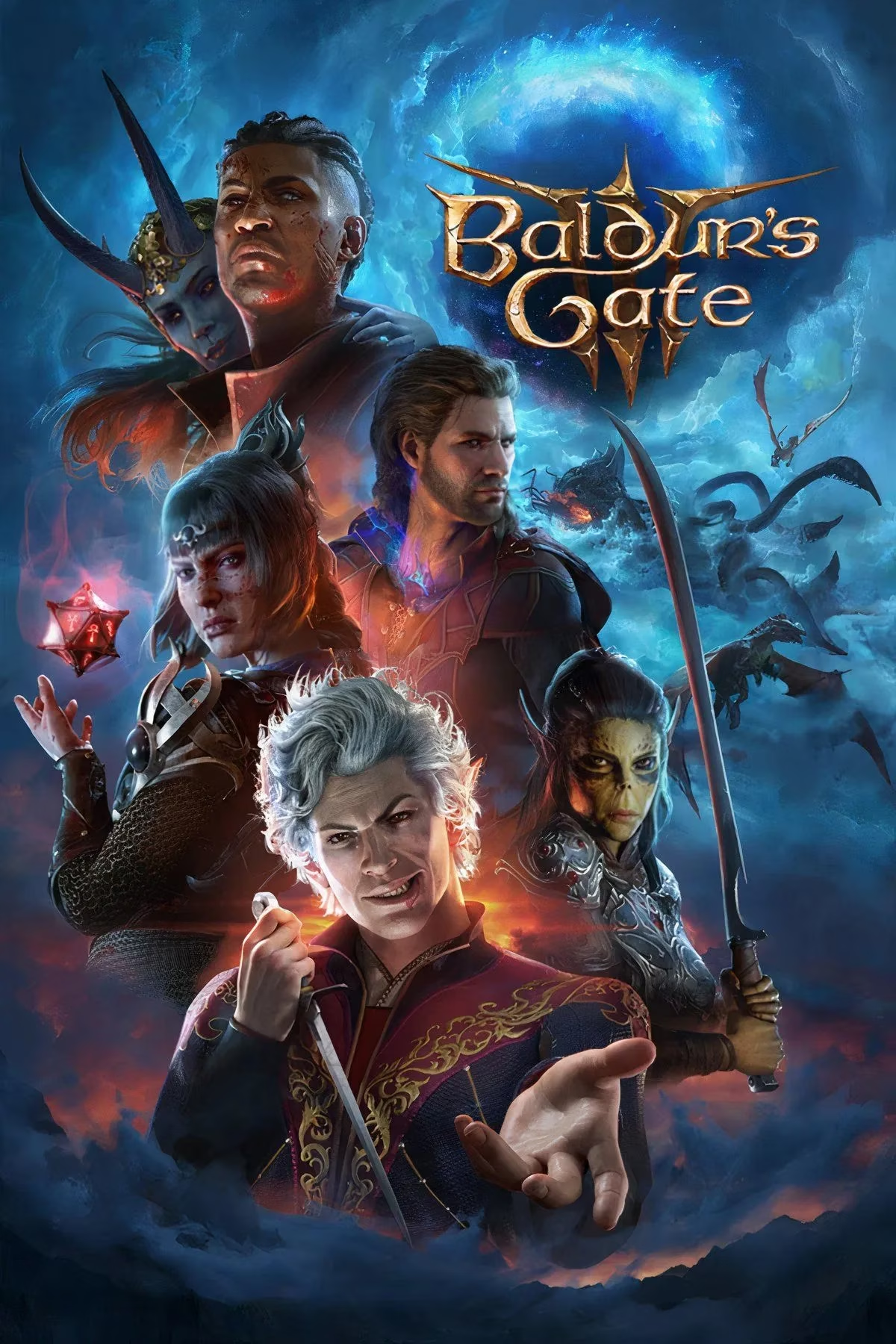
This infusion of content gave veteran players over a hundred additional hours of experimentation. A Giant Barbarian suddenly became the party’s living siege weapon, while a Circle of Stars Druid painted the battlefield with cosmic light. The Swashbuckler Rogue danced through encounters with a style previously reserved for mods. By including such diverse fantasies, Larian assured that
Baldur’s Gate 3 would remain installed on hard drives well beyond the last patch note.
Life After Major Updates: Polishing and the Modding Renaissance
Even after Patch 8, the game did not go entirely silent. Through 2026, Larian continued to release minor hotfixes and tidy-up patches. These addressed rare dialogue inconsistencies, subtle animation hitches on newly introduced subclass spells, and lingering interaction bugs that only surfaced when thousands of players pushed the limits of cross-play. These updates were small – often just a few dozen megabytes – but they demonstrated that Larian’s quality bar never dropped, even as the team shifted its primary focus elsewhere.
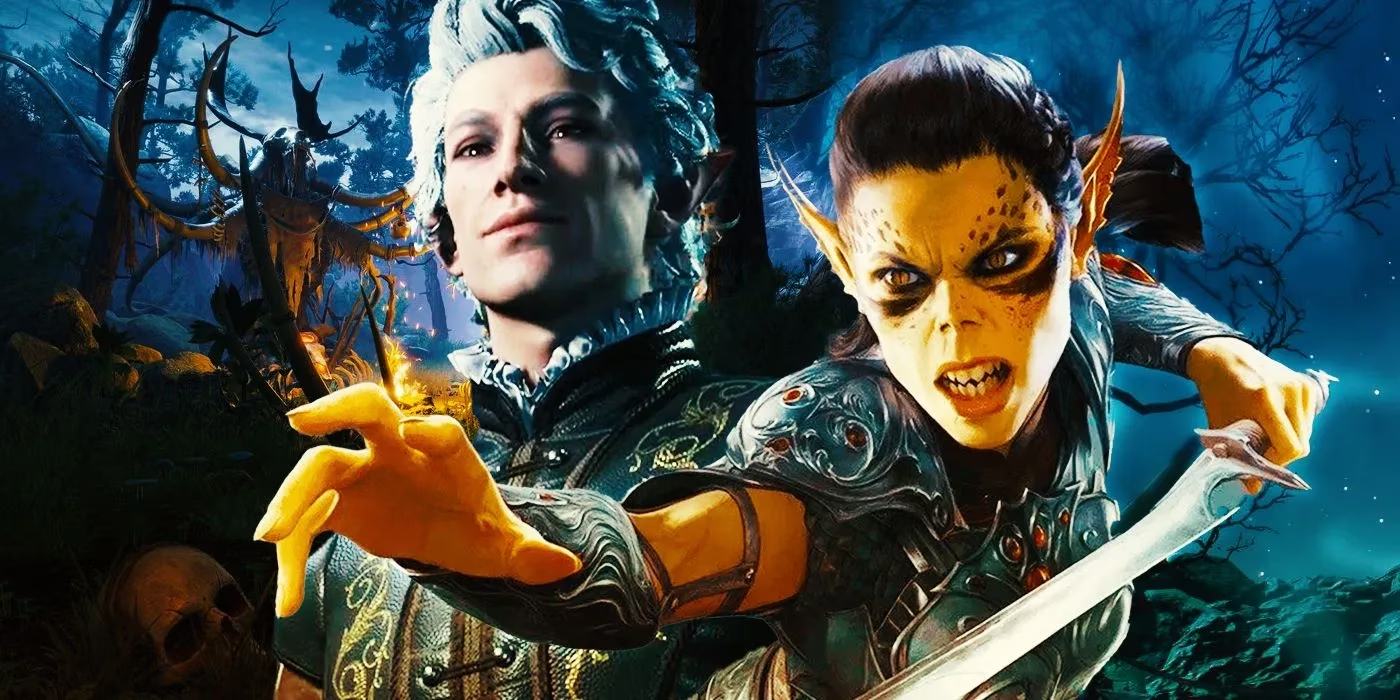
The most enduring legacy of the post-launch period, however, turned out to be the mod toolkit introduced in 2024’s Patch 7. By 2026, the in-game mod manager had become a bustling ecosystem. Community creators built custom campaigns, visual overhauls, and even fully voiced companions that rivalled official content. Larian kept a watchful eye, occasionally updating the toolkit for stability, but no large-scale reworks were needed. The studio had successfully handed the keys to the players, ensuring that Baldur’s Gate 3 could evolve indefinitely without their direct involvement. The modding scene became so vibrant that some joked Faerûn would never truly be finished – only temporarily abandoned by its original architects.
Larian’s Next Chapter
By 2026, it was common knowledge that Larian Studios had moved on. The team had publicly stated that Baldur’s Gate 4 would not be their next project, a decision that initially stung fans but eventually garnered respect. Instead, the developer opened a new chapter with an unannounced original IP, one that promised the same depth and player agency. Industry insiders hinted at a science-fiction setting or a completely new fantasy universe, but Larian remained characteristically tight-lipped. What remained consistent was their philosophy: deep turn-based combat, systemic reactivity, and a commitment to free post-launch support.
The studio’s departure from Baldur’s Gate 3 did not feel like abandonment; it felt like a natural conclusion. They had delivered everything they promised – and more. The 2025 Community Update on Steam had called Patch 8 a farewell, and that farewell was as graceful as a perfect roll of the dice. Gamers in 2026 look back on the journey with a rare kind of satisfaction, knowing that one of the greatest RPGs of the decade had a beginning, a rich middle, and a proper ending.
In the end, Baldur’s Gate 3 stands as a testament to what happens when a developer truly listens. The final major update may be a year in the past, but its spirit lives on in every screenshot shared with photo mode, every cross-platform reunion, and every Giant Barbarian hurling a goblin into the sunset. Larian has walked out of Faerûn, but the gate they opened will likely never close again.
In-depth reporting is featured on Game Developer, and it helps frame why Baldur’s Gate 3’s “final form” after Patch 8 feels so durable: once major feature development winds down, longevity increasingly depends on stable pipelines, tool support, and a community that can safely extend the experience. Seen through that lens, Larian’s late-life emphasis on cross-platform stability, ongoing hotfix polish, and the earlier mod toolkit reads less like a last burst of content and more like a deliberate handoff—locking in a complete baseline while empowering creators to keep Faerûn evolving long after official patch notes stop.