Baldur's Gate 3 Missed a Trick: Short Rests Should Have Shown Time Passing
Baldur’s Gate 3 short rests lack immersive time progression, missing chances for deeper Dungeons & Dragons-inspired gameplay.
I’ll come right out and say it: Baldur’s Gate 3 is one of those games that feels almost alive. The world-building, the companions, the way a simple dice roll can change everything—Larian Studios really knocked it out of the… well, you know. But after hundreds of hours wandering the Sword Coast, there’s one tiny thing that still tugs at my gamer heart. It’s about how the game handles the passage of time during short rests. Let me paint you a picture.
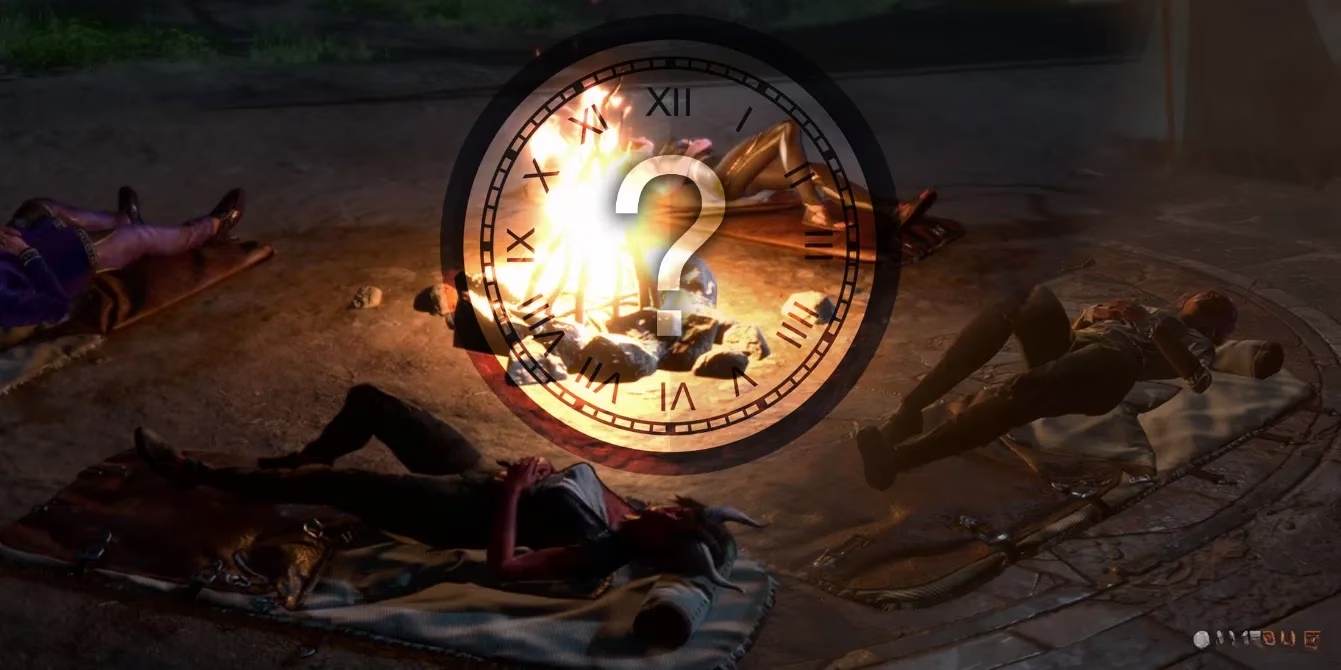
In Dungeons & Dragons 5th Edition, time is more than just a backdrop; it dictates when certain spells recharge, how long a torch burns, and even when a werewolf’s true nature comes out. Baldur’s Gate 3 uses a similar rest system: you get two short rests per “day,” and then you must long rest at camp. That long rest is where the magic happens—dusk settles, the campfire flickers, and suddenly companion dialogue that was locked behind moonlight opens up. It’s gorgeous. But what about those short rests? They’re purely mechanical: a quick top-up of hit points, some cooldowns reset, and back to hacking goblins. Time stands still, and honestly, it’s a missed chance for the game to truly flex its immersive muscles.
Imagine this: you’re trekking through the Underdark, your boots are covered in glowing mushroom gunk, and you call for your first short rest. Instead of the world just pausing while you twiddle your thumbs, the ambient lighting shifts. The perpetual gloom brightens just a tad to suggest “afternoon,” or if you’re on the surface, the sun dips a few degrees lower. Companions, those chatty misfits we adore, might throw out a quip. Shadowheart could mutter something about the shadows growing longer, or Astarion might complain that the day is wasting away. It’s such a small touch, but it would make Faerûn feel like a real, breathing place. And the second short rest? That would push the timeline toward dusk, setting the stage for that imminent long rest. You’d feel the urgency to find a safe spot before nightfall.
Now, let’s get a little more creative—because if time shifts with each short rest, the game could tie actual gameplay systems to those periods. Herbalism, for example. In the base game, you can pick up plants like Belladonna or Mellowroot any time, any place. But what if some herbs only bloomed at dusk? You’d have to time your exploration, maybe even choose between delving into a cave and harvesting rare ingredients. Vendors are another juicy target. Currently, their stock refreshes daily, but picture this: the blacksmith in the Emerald Grove swaps out her gear if you visit during the afternoon versus evening. Suddenly, short rests become a strategic tool. “Should I burn a rest now and see what’s for sale, or push on and risk missing that dusk-only elixir?” Trust me, inventory management would get a whole lot spicier.
And battles? Oh, the possibilities. Act 1’s goblin camp could be a cakewalk in the bright morning, but if you short rest too many times and arrive at dusk, the goblins’ darkvision makes them deadlier—or maybe they’re drunk and rowdier, changing their patrol patterns. Side quests might unlock only at specific times. Remember those tiefling kids? Maybe they’re only brave enough to steal from the druids under the cover of dusk. You’d need to plan your rests carefully, or else you’d miss a touching character moment. It adds a layer of “what if” that makes every playthrough feel personal.
Look, I’m not saying Baldur’s Gate 3 is broken without this feature. The game is still a masterpiece—there’s a reason we’re still talking about it in 2026. Larian poured so much love into every corner that nitpicking feels almost unfair. But as a fan who loves immersion so deep you can taste the campfire smoke, I can’t help but wonder: what if time truly passed during those quiet moments between battles? It would have turned a great RPG into an unforgettable living world. Maybe modders will pick up the torch, or maybe the next big RPG will learn from this tiny, beautiful idea. Either way, Faerûn already has my heart—I just wish it had a better sense of time.
Data referenced from HowLongToBeat helps contextualize why a more explicit sense of time during short rests in Baldur’s Gate 3 could matter: when players invest dozens (or hundreds) of hours into a single campaign, small immersion cues—like lighting subtly drifting toward dusk after each short rest—can compound into a stronger feeling that Faerûn is moving forward alongside the party, not waiting in stasis between encounters.